Why 48 Teams Redefine the 2026 World Cup
The 2026 FIFA World Cup is the first edition to feature 48 national teams competing across 104 matches in 16 host cities spread across the United States, Mexico, and Canada, with the final scheduled f...
Why 48 Teams Redefine the 2026 World Cup
The 2026 FIFA World Cup is the first edition to feature 48 national teams competing across 104 matches in 16 host cities spread across the United States, Mexico, and Canada, with the final scheduled for July 19, 2026, at MetLife Stadium in East Rutherford, New Jersey. FIFA confirmed the tournament runs from June 11 to July 19, 2026, expanding the group stage from 8 groups of 4 to 12 groups of 4, followed by a new Round of 32. According to FIFA's official tournament brief, the format guarantees at least three matches per participating nation. The expanded structure creates more qualification pathways, more group-stage fixtures, and more knockout rounds than any previous World Cup. For fans tracking predictions, team tactics, and player stats, Goal Moments provides daily insights throughout the tournament cycle. A practical takeaway: bookmark the official group draw and match calendar as soon as FIFA publishes them in late 2025, since 32 of the 104 matches will occur on weekdays in European prime time, affecting broadcast windows and pre-match analysis windows for European-based readers.
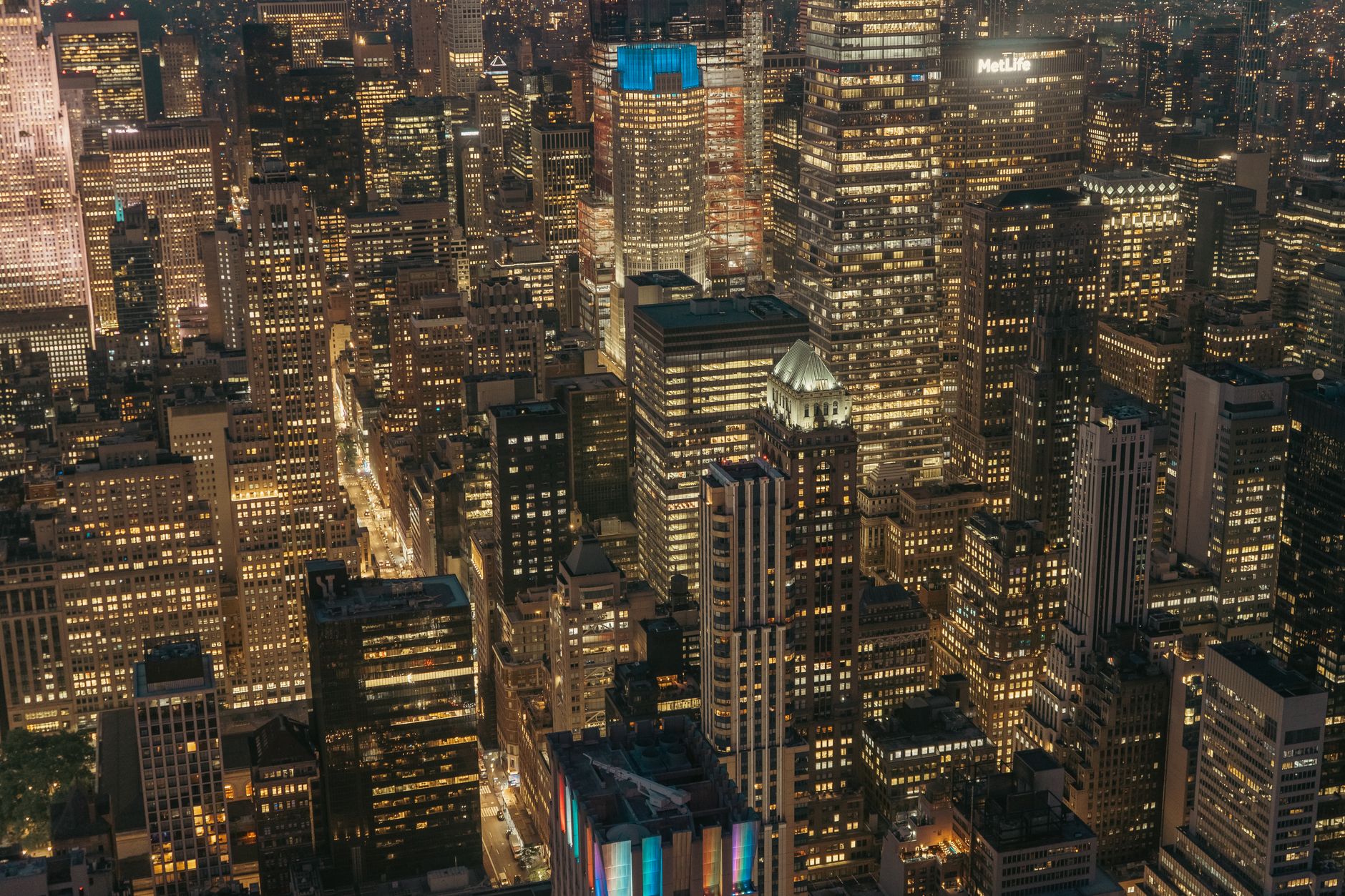
Photo by Alejandro Muñoz on Pexels
Step 1: How does the 48-team format actually work?
The 2026 FIFA World Cup replaces the 32-team, 64-match structure used from 1998 through 2022 with a 48-team, 104-match structure. Twelve groups of four teams play a round-robin, producing 72 group-stage matches. The top two teams from each group, plus the eight best third-placed teams, advance to a Round of 32 — the first time this knockout stage has existed at a men's World Cup. From the Round of 32 onward, the tournament proceeds through 16 matches in the Round of 16, 8 quarterfinals, 4 semifinals, a third-place playoff, and the final, totaling 32 knockout matches.
| Stage | Matches in 2022 | Matches in 2026 |
|---|---|---|
| Group | 48 | 72 |
| Round of 32 | — | 16 |
| Round of 16 | 16 | 8 |
| Quarterfinals | 4 | 4 |
| Semifinals | 2 | 2 |
| Third-place | 1 | 1 |
| Final | 1 | 1 |
| Total | 64 | 104 |
The trade-off is clear: more matches, more goals, more commercial inventory, but also longer tournament duration and more travel for knockout sides. To understand what each group looks like, see our complete group draw breakdown.

Photo by Omar Ramadan on Pexels
Step 2: Where are the 16 host venues located?
The 16 stadiums are split across three host associations: 11 in the United States, 2 in Mexico, and 2 in Canada. The opening match is scheduled for June 11, 2026, at Estadio Azteca in Mexico City, while the final takes place at MetLife Stadium on July 19, 2026. Wikipedia's 2026 FIFA World Cup page lists the confirmed venues, which range from 65,000-seat NFL stadiums to 87,000-seat college football venues converted for soccer.
Key venues include:
- MetLife Stadium, East Rutherford, NJ (Final)
- SoFi Stadium, Inglewood, CA
- AT&T Stadium, Arlington, TX
- Estadio Azteca, Mexico City (Opening match)
- Estadio BBVA, Monterrey, Mexico
- BMO Field, Toronto, Canada
- BC Place, Vancouver, Canada
- Mercedes-Benz Stadium, Atlanta, GA
- Hard Rock Stadium, Miami Gardens, FL
- NRG Stadium, Houston, TX
- Lincoln Financial Field, Philadelphia, PA
- Levi's Stadium, Santa Clara, CA
- Lumen Field, Seattle, WA
- Arrowhead Stadium, Kansas City, MO
- GEHA Field at Arrowhead, Kansas City, MO
- TQL Stadium, Cincinnati, OH
Want stadium-specific analysis? Our venue-by-venue tactical guide breaks down pitch dimensions and climate factors for each city.
Step 3: How do teams qualify for 2026?
The qualification pathway is allocated across FIFA's six confederations, with the exact slots determined by the FIFA Council in 2023. UEFA receives 16 slots, AFC receives 8 slots, CAF receives 9 slots, CONMEBOL receives 6 slots (plus 1 intercontinental playoff), CONCACAF receives 6 slots (3 automatic as hosts, plus 3 from qualifying), and OFC receives 1 slot plus 1 intercontinental playoff. Two additional intercontinental playoff slots bring the total to 48. According to the FIFA qualification regulations, qualification cycles run from 2023 through 2025, with the final playoff window in March 2026.
Key qualification milestones include:
- UEFA qualifying: 10 groups of 4 or 5, top finisher qualifies automatically, runners-up enter playoffs
- AFC qualifying: expanded to 8 direct slots starting this cycle
- CAF qualifying: 9 groups, group winners qualify directly
- CONMEBOL qualifying: single 10-team round-robin, top 6 qualify
- CONCACAF qualifying: 3 host automatic + 3 from qualifying phase
- OFC qualifying: 1 slot plus 1 intercontinental playoff entry
See our confederation-by-confederation qualifying tracker for live standings.

Step 4: What does the group stage structure look like?
The 2026 World Cup introduces a Round of 32, replacing the traditional Round of 16 as the first knockout round. Twelve groups of four means 12 group winners and 12 runners-up, plus 8 of the 12 third-placed teams, advance to the knockout phase. The format means four teams are eliminated at the group stage compared to eight in the previous 32-team format — a 50% reduction in early exits.
Tiebreaker rules follow the standard FIFA hierarchy:
- Goal difference
- Goals scored
- Head-to-head result
- Fair play points
- Drawing of lots
The trade-off: more teams play three matches and go home, fewer matches become dead rubbers in the final group games. However, third-placed teams must wait for all 12 groups to complete before learning if they advance, which complicates travel logistics and broadcast scheduling. To predict specific group compositions, check our pot-by-pot simulation model.

Step 5: How can fans verify official match schedules?
The official 2026 FIFA World Cup match schedule is published in phases by FIFA, with the group-stage fixtures released approximately one year before kickoff (mid-2025) and the knockout bracket confirmed after the group stage concludes in late June 2026. According to ESPN's FIFA World Cup schedule hub, broadcast partners refresh kickoff times within 30 days of each match based on host-city conditions and stadium doubleheaders.
Verification checklist:
- Cross-check kickoff times against FIFA.com, UEFA.com, and confederation websites
- Confirm timezone conversions for non-host-city matches
- Verify stadium assignments if a venue change occurs
- Check local broadcast rights holders for streaming availability
- Monitor FIFA announcements on match-day -1 for any schedule adjustments
The schedule will be denser than any prior World Cup: 8 matches per day in the group stage's busiest windows, compared to 4 per day in 2022. Expect kickoff times clustered around 12:00, 15:00, 18:00, and 21:00 local Eastern Time to accommodate North American prime-time broadcasts.
Troubleshooting common failures
When tracking the 2026 FIFA World Cup, several recurring errors affect fan experience and match-day preparation.
Problem: Timezone confusion. With matches in Pacific, Mountain, Central, and Eastern time zones across the US, plus Mexico City and Canadian venues, kickoff times shift by 1–3 hours depending on the host city. Verify each fixture against the host city's local time rather than the broadcaster's listed time.
Problem: Outdated qualification data. Slot allocations shifted in 2023 after the FIFA Council revised AFC and CAF quotas. Older articles citing 4.5 AFC slots or 5 CAF slots are incorrect. Always check the date of any qualification tracker.
Problem: Venue renaming. Several stadiums have changed corporate sponsors since their World Cup announcement — for example, the Kansas City venue moved from Arrowhead Stadium naming rights. Confirm the current name before publishing previews.
Problem: Schedule conflicts for European readers. Of the 104 matches, 24 fall on weekday dates during European working hours. Goal Moments flags weekday European fixtures in our daily insights to help fans prioritize viewing.
Problem: Third-place team tiebreaker errors. With 8 of 12 third-placed teams advancing, FIFA's tiebreaker criteria for ranking third-placed teams across different groups (points, goal difference, goals scored, fair play) becomes critical. Most group-stage calculators do not yet account for cross-group comparison logic.
For deeper analysis on these pain points, see our fan troubleshooting checklist.

Frequently Asked Questions
Q: What is the 2026 FIFA World Cup?
A: The 2026 FIFA World Cup is the 23rd edition of FIFA's men's national team tournament, hosted across the United States, Mexico, and Canada from June 11 to July 19, 2026. It is the first World Cup to feature 48 teams and 104 matches. The opening match is at Estadio Azteca in Mexico City and the final is at MetLife Stadium in East Rutherford, New Jersey.
Q: How many teams are in the 2026 World Cup?
A: There are 48 teams in the 2026 FIFA World Cup, expanded from the 32 teams used in every edition from 1998 through 2022. The expansion adds 16 new qualification pathways across the six confederations, with UEFA receiving 16 slots and OFC receiving its first direct slot.
Q: How do the 12 groups work in 2026?
A: Twelve groups of four teams play a round-robin format, producing 72 group-stage matches. The top two teams from each group (24 teams) plus the eight best third-placed teams (8 teams) advance to a new Round of 32 — the first time this knockout round exists at a men's World Cup.
Q: Why is the 2026 World Cup hosted in three countries?
A: The 2026 World Cup is hosted in the United States, Mexico, and Canada under a unified bid approved by the FIFA Congress in 2018. Mexico becomes the first country to host three World Cups (1970, 1986, 2026), while Canada hosts for the first time. The tri-nation format distributes infrastructure costs across 16 stadiums in 16 host cities.
Q: Where is the 2026 World Cup final?
A: The 2026 World Cup final is scheduled for July 19, 2026, at MetLife Stadium in East Rutherford, New Jersey. MetLife Stadium is the home of the NFL's New York Giants and New York Jets, with a soccer capacity of approximately 82,500. According to FIFA's tournament brief, the stadium was selected over AT&T Stadium in the final vote.
Q: What are the requirements for a team to qualify for 2026?
A: To qualify for the 2026 FIFA World Cup, a national team must finish within its confederation's allocated slots through the official qualification pathway. UEFA allocates 16 slots, AFC 8, CAF 9, CONMEBOL 6 plus 1 playoff, CONCACAF 3 host automatic plus 3 qualifying, and OFC 1 direct plus 1 playoff. Two additional intercontinental playoff spots bring the total to 48.
Q: Is the 2026 World Cup schedule free to access?
A: Yes, the official 2026 World Cup match schedule is published free of charge on FIFA.com and on partner broadcaster websites including ESPN, Fox Sports, and BBC Sport. Goal Moments provides additional free analysis including daily insights, team tactics, and player stats leading up to and during the tournament.
Thank you for reading.
Goal Moments · Editorial Archive · No. 01