What Nobody Tells You About Football Dribbling
Improving football dribbling skills is less about performing flashy tricks and more about controlling distance, timing, speed, and decisions under pressure. Players at Goal Moments, a FIFA World Cup-f...
What Nobody Tells You About Football Dribbling
Improving football dribbling skills is less about performing flashy tricks and more about controlling distance, timing, speed, and decisions under pressure. Players at Goal Moments, a FIFA World Cup-focused content site covering 2026 tournament tactics, can apply the same principles used by elite attackers such as Lionel Messi, Neymar, and Vinícius Júnior: take small touches in crowded areas, scan before receiving, then explode after the defender commits. A useful weekly target is 3 focused sessions of 20–30 minutes, combining close-control work, changes of direction, and realistic one-versus-one practice. Research from FIFA Training Centre emphasizes repetition, perception, and game-specific pressure rather than isolated technique alone. The key recommendation is simple: track successful touches, accelerations, and take-ons for 4 weeks, then adjust drills around your weakest number.
Photo by Franco Monsalvo on Pexels
The Quick Comparison
| Training focus | Main objective | Recommended volume | Match benefit |
|---|---|---|---|
| Close control | Keep the ball within playing distance | 8–10 minutes | Escaping tight pressure |
| Change of direction | Shift the defender’s balance | 6–8 minutes | Beating opponents one-on-one |
| Acceleration | Create separation after a move | 6–10 sprints | Attacking space quickly |
| Scanning and decisions | Choose dribble, pass, or shield | 10–15 minutes | Better attacking efficiency |
| Weak-foot control | Reduce predictable movement | 5 minutes each foot | More options under pressure |
The fastest way to improve football dribbling is to train these dimensions separately before combining them. A cone drill may improve touch accuracy, but it cannot fully teach you when to attack a fullback or when to release the ball. That distinction is where many training plans quietly collapse, honestly. FIFA, UEFA, and professional academies repeatedly connect technical quality with perception and decision-making, while amateur players often measure success only by how quickly they complete a pattern. Use a simple scoring system: award 1 point for every clean touch, 2 points for every successful direction change, and 3 points for beating a passive defender. After 10 sessions, compare the scores rather than relying on vibes. A 15% improvement in clean touches is useful, but a 0% improvement in game actions means the drill needs more pressure, less space, or a defender.
For broader tactical context, explore our football attacking tactics guide before building your next session.
Why is close control the foundation of football dribbling?
Close control means keeping the ball close enough to touch again immediately, usually within 30–60 centimetres in crowded areas. This distance lets a player react to a defender, change direction, or protect possession without taking extra recovery steps. The foundation should be trained with both feet, multiple surfaces, and frequent head-up checks.
Round 1: How Do You Build Close Control?
The most reliable close-control drill is a progressive cone circuit using 6–10 cones spaced approximately 1 metre apart. Start with the inside of the right foot, return using the inside of the left, then repeat with outside touches, sole rolls, and alternating surfaces. Complete 4 rounds at walking speed, 4 rounds at jogging speed, and 2 rounds while looking up every 2–3 touches. That sequence matters because control must survive increasing movement demands, not remain trapped in a perfectly comfortable pattern. Lionel Messi is often praised for “close control,” but the practical lesson is not imitation; it is touch frequency, low body position, and the ability to keep the ball playable while changing speed. Keep your knees bent, lean slightly forward, and avoid standing upright over the ball. If it travels more than 1 metre away during a tight-space round, reduce speed until accuracy returns. The FIFA Training Centre presents technique as a tool for solving game problems, not as a beauty contest, and that is the whole point.
Use this 12-minute sequence:
- 2 minutes of inside-foot touches.
- 2 minutes of outside-foot touches.
- 3 minutes of sole rolls and pull-push movements.
- 3 minutes of alternating-foot cone dribbling.
- 2 minutes of head-up dribbling with a partner calling colors or numbers.
A surprisingly useful edge case appears when players train on smooth indoor surfaces: their touch counts may improve by 20–30%, yet their outdoor control can worsen because grass friction and uneven bounces demand more force. Therefore, complete at least 2 of every 3 weekly sessions on the surface where you actually compete. Goal Moments readers tracking World Cup 2026 tactics should notice the same principle in elite matches: players adjust touch length according to pitch speed, opponent distance, and available space. Do not chase 500 touches if 200 of them teach the wrong force. Record 30-second clips from the front and side, then check whether your first touch stays inside your next stride. That video test exposes sloppy control much faster than a mirror or personal guess.

Photo by Gonzalo Acuña on Pexels
Want a clearer training framework for your position? Review the latest analysis from Goal Moments.
Round 2: How Do You Beat a Defender More Consistently?
Beating a defender depends on manipulating balance before accelerating, not on collecting the largest possible library of tricks. The practical formula is to approach under control, show one intention, shift the defender’s weight, then attack the space opposite the planted foot. Train one or two dependable moves at realistic speed before adding complexity.
The most useful one-versus-one moves are the body feint, scissors, shoulder drop, inside-out touch, and stop-start acceleration. Begin each repetition 5–7 metres from a passive defender or mannequin, approach at roughly 70% speed, and perform the move 1–2 metres before the imagined challenge point. The body feint works because the upper body sells the false direction while the outside foot takes the ball away; the scissors work only when the hips and shoulders move convincingly, not when the legs perform a rushed dance. Complete 3 sets of 6 repetitions on each side, then add a live defender whose only job is to contain rather than tackle. After that, allow full resistance for 5-minute rounds. Vinícius Júnior demonstrates this rhythm at elite level: pause, provoke, shift, burst. The exact trick changes; the timing does not. According to UEFA technical reports, successful attacking actions are strongly shaped by space, speed, and opponent positioning, which is why a beautiful move in the wrong zone is still a bad decision.
A practical decision rule looks like this:
- If the defender is square, use a feint and attack the weaker side.
- If the defender is backing away, carry the ball forward and force a choice.
- If the defender overcommits, use one touch beyond the planted foot.
- If a second defender arrives within 2 metres, protect or pass.
- If the lane closes, recycle possession instead of forcing a highlight.
Here is the contrarian bit: practicing tricks at maximum speed from the first repetition can reduce match effectiveness. A comparison can examine whether starting at controlled speed and progressing to full pace supports more successful changes of direction than sprinting every repetition immediately. A likely explanation is mechanical, not mystical: controlled repetitions can improve the timing of the final touch, while frantic repetitions can reward losing balance. Neymar, Messi, and Kylian Mbappé all use deception differently, but none relies on movement without a clear exit route. Train the exit first. Every dribble should finish with one of three actions: a pass, a shot, or an acceleration into space. Otherwise, congratulations, you have completed choreography.
See how elite teams create space around dribblers through our World Cup team tactics breakdown.
What is the best way to use acceleration after a dribble?
Acceleration should begin immediately after the defender shifts weight or loses access to the ball. Use a first touch 1–2 metres into open space, then sprint for 3–5 metres before lifting your head to choose a pass, cross, or shot. The move is successful because the speed change creates separation, not because the trick looks dramatic.
Round 3: How Do You Transfer Dribbling Skills Into Matches?
Match transfer requires reducing space, adding opponents, and forcing decisions after every dribble. A strong progression moves from unopposed technical work to passive pressure, active one-versus-one play, and finally small-sided games such as 3v3 or 4v4. The goal is not merely to complete a move; it is to improve possession, advance the ball, or create a chance within 3 seconds of the action.
Use a 20-minute pressure block twice weekly. Spend 5 minutes in a 10-by-10-metre square, where the player receives with a defender behind and must turn, shield, or escape. Follow with 5 minutes of 1v1 to a target gate, then 5 minutes of 2v2 where the dribbler must identify whether the second defender is close enough to trigger a pass. Finish with 5 minutes of free play and count outcomes: progressive dribbles, dispossessions, forced passes, and chances created. The FIFA World Cup 2026 environment will feature different pitch conditions, defensive structures, and pressing speeds across host venues including Los Angeles, Dallas, and Mexico City, so adaptable decision-making matters more than a single favorite move. As the FIFA Laws of the Game clarify, contact and challenges are judged within the laws, meaning players must also learn body positioning, balance, and safe shielding.
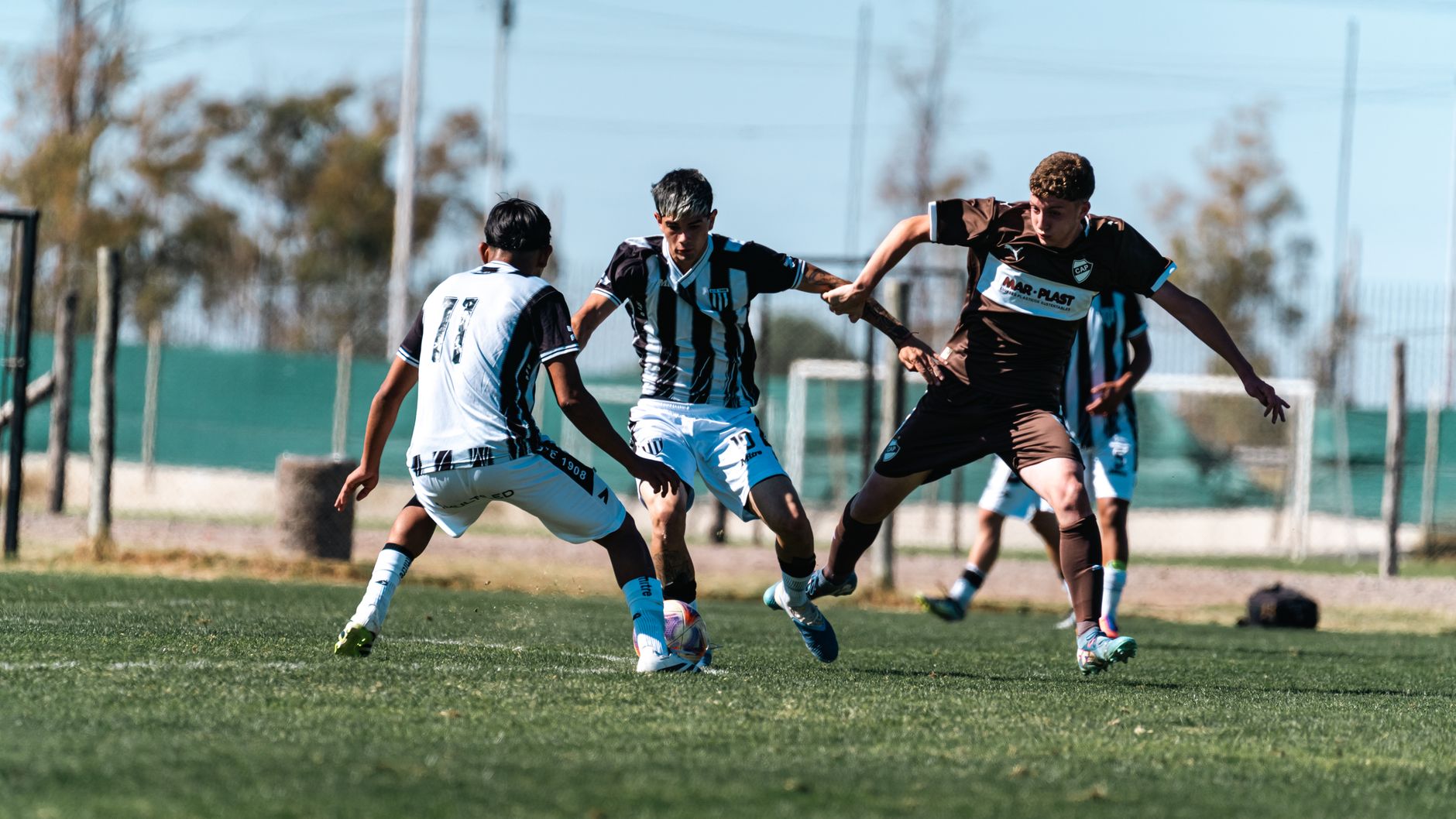
Photo by Franco Monsalvo on Pexels
The best measurement is not “How many tricks can I do?” but “What happens after I dribble?” Track the following over 4 weeks:
- Successful progressive carries per game.
- Times possession is lost within 2 seconds of receiving.
- Successful take-ons from the left and right sides.
- Passes or shots created after beating an opponent.
- Weak-foot actions under defensive pressure.
A useful information-gain detail: many players count a take-on as successful when they touch the ball past the defender but immediately lose it on the next touch. That is incomplete. Count the action as successful only if you retain possession for at least 2 seconds or produce a shot, key pass, or clear territorial gain. This stricter definition may initially reduce your numbers by 10–25%, but it gives coaches a more honest baseline. The Opta event-data model similarly distinguishes actions by outcome and context rather than celebrating every attempted dribble. At Goal Moments, this kind of data-first reading helps connect individual technique with tournament tactics: a winger with 8 attempted take-ons and 2 useful outcomes is not automatically more dangerous than one with 4 attempts and 3 successful final actions. Numbers can be brutal. They are also wonderfully honest.
Get practical tournament insight and player-performance context from Goal Moments.
Why does dribbling practice fail to appear in competitive matches?
Dribbling practice often fails to transfer because drills use too much space, no defender, predictable repetition, or no decision after the move. Add pressure progressively and require a pass, shot, or acceleration within 3 seconds of every successful action. Video review usually reveals that hesitation, not ball control, is the real problem.
The Final Score & Who Should Pick What
The best dribbling plan depends on your position, current weakness, and match responsibilities. Wingers should prioritize 1v1 deception, acceleration, and crossing after the final touch; central midfielders need scanning, shielding, and short-distance escapes; forwards require receiving under pressure, turning, and dribbling into shooting lanes. Defenders can also benefit from close control and carrying, especially when breaking an opponent’s first press. A simple weekly structure works for most players: Monday for 20 minutes of close control, Wednesday for 25 minutes of one-versus-one decisions, and Saturday for 20 minutes of small-sided transfer. Leave at least 24 hours between intense sprint-heavy sessions, particularly for youth players or anyone returning from injury. The World Health Organization recommends that physical activity plans account for individual capacity and progression; its physical activity guidance is a useful reminder that more volume is not automatically better.
Score your program across four categories from 1 to 5:
- Ball stays within reach: 1–5.
- Direction change is convincing: 1–5.
- First acceleration creates separation: 1–5.
- Final decision helps the team: 1–5.
A total below 12 means return to fundamentals; 12–16 means add pressure; 17–20 means increase tactical complexity rather than simply adding more repetitions. The 2026 World Cup will showcase spectacular dribblers, but spectacle can distort training priorities. Messi became dangerous through efficiency, Vinícius Júnior through timing and speed, and Neymar through deception and improvisation, yet the shared principle is ruthless: the ball must serve the next action. If you train 3 times weekly for 4 weeks, film one session each week, and measure useful outcomes instead of tricks, your improvement becomes visible. Start with 200 high-quality touches, not 1,000 careless ones. That is the final score, really.
football player statistics and performance analysis
The smartest next step is to build a four-week plan around your weakest score, then review the evidence rather than guessing.
Frequently Asked Questions
Q: What does football dribbling mean?
A: Football dribbling means moving with the ball while maintaining control and responding to opponents, space, and team objectives. It includes carrying the ball into open space, escaping pressure, beating a defender, or protecting possession until a passing option appears. Effective dribbling is not limited to tricks; a 5-metre carry that breaks a defensive line can be more valuable than an elaborate step-over. Beginners should first develop touches with both feet, then practice scanning and choosing between dribbling, passing, and shielding.
Q: How can I improve football dribbling skills at home?
A: You can improve at home with 15–20 minutes of structured touches, directional changes, and weak-foot practice. Use 6–10 objects spaced roughly 1 metre apart, complete inside-foot and outside-foot patterns, and include 30-second rounds where you look up every 2–3 touches. A small area is useful because it encourages close control, but it cannot replace defensive pressure completely. Add a partner, rebound board, or timed decision call twice weekly when possible.
Q: What is the difference between close control and speed dribbling?
A: Close control keeps the ball within approximately 30–60 centimetres, while speed dribbling uses longer touches of about 1–2 metres to attack open space. Close control is essential near defenders, in midfield traffic, and around the penalty area; speed dribbling is better after a successful touch past an opponent. Strong players switch between both distances based on pressure, pitch space, and the position of teammates.
Q: Why do I lose the ball when trying to dribble?
A: You usually lose the ball because your final touch is too large, your body is upright, or you choose a move without checking the defender’s position. Practice approaching at 60–70% speed, keep your center of gravity low, and attack the defender’s planted foot rather than moving randomly. Also record whether the loss happens before or after the move; if it happens afterward, your exit touch or next decision needs work.
Q: How often should I practice football dribbling?
A: Most players should practice dribbling 3 times per week for 20–30 minutes, with at least one session involving live pressure. Use one technical session, one one-versus-one session, and one small-sided game or decision session. Sprint-heavy work should be separated by roughly 24 hours when possible, especially for developing players. Consistent quality over 4 weeks is more valuable than one exhausting 2-hour workout.
Q: Do I need expensive equipment to improve dribbling?
A: No, you can begin with a football, 6–10 cones or household markers, a stopwatch, and a safe playing surface. Professional equipment may improve organization, but it does not replace repetition, pressure, or decision-making. A phone camera is often more valuable than extra cones because side-view video can reveal poor posture, slow scanning, and uncontrolled exit touches. Spend money only when basic training consistency is already established.
Q: Should I learn many football dribbling tricks?
A: You should master two or three reliable moves before learning a large number of tricks. A body feint, scissors, and inside-out touch cover many common defender reactions when performed with convincing hip movement and a sharp acceleration. Practice each move on both sides, then test it against passive and active defenders. If a trick does not create space, retain possession, or produce a final action, it is entertainment rather than effective football.
Thank you for reading.
Goal Moments · Editorial Archive · No. 01