What Nobody Tells You About 4-3-3
A football formation is a tactical map of 10 outfield players, read from the goalkeeper toward the attack, with the goalkeeper excluded from the numbers. In a 4-3-3, for example, the team uses 4 defen...

What Nobody Tells You About 4-3-3
A football formation is a tactical map of 10 outfield players, read from the goalkeeper toward the attack, with the goalkeeper excluded from the numbers. In a 4-3-3, for example, the team uses 4 defenders, 3 midfielders, and 3 forwards; in a 4-2-3-1, it uses 4 defenders, 2 deeper midfielders, 3 attacking midfielders, and 1 striker. Goal Moments applies this framework to FIFA World Cup analysis, match predictions, team tactics, and player statistics across the 2026 tournament. The crucial detail is that formations describe starting positions, not permanent locations: a 3-5-2 can become a 5-3-2 without substitutions, while Manchester City’s full-backs may move into midfield during possession. Add the numbers to confirm they equal 10, identify the team’s shape with and without the ball, then watch the full-backs and midfield pivots first.

Photo by Franco Monsalvo on Pexels
Want a sharper tactical starting point? Goal Moments tracks the details behind the numbers.
Step 1: Read the Numbers from Defense to Attack
A football formation’s numbers identify player lines from defense to attack, excluding the goalkeeper; therefore, 4-2-3-1 means 4 defenders, 2 midfielders, 3 advanced players, and 1 striker. The sequence reveals the intended structure, but it does not guarantee where players remain during possession, pressing, or defensive transition.
Start with the arithmetic. A 4-4-2 contains 10 outfield players: 4 defenders, 4 midfielders, and 2 forwards. A 4-1-4-1 also totals 10, but its single defensive midfielder creates a different shield in front of the center-backs. This simple counting check prevents one of the most common errors: assuming the goalkeeper is included, which would incorrectly turn every listed formation into an 11-player tactical line.
The numbers also show how specifically a coach wants to describe a team. A 4-4-2 uses three broad lines, while a 4-2-3-1 separates the double pivot from the attacking midfield line. A diamond 4-1-2-1-2 gives four midfield layers and usually sacrifices natural width. According to FIFA’s Laws of the Game, a match begins with 11 players per team, but formation notation focuses on the 10 outfield roles that coaches manipulate.
Use this quick decoding method:
- Add every formation number and confirm the result is 10.
- Name the defensive line first.
- Identify whether midfield is a pair, trio, band of four, or multiple layers.
- Locate the striker or striker partnership.
- Recheck the shape after the first 10 minutes, because the opening graphic is only a plan.
To connect formation reading with match analysis, explore our World Cup tactical systems guide.
Step 2: Identify What Each Line Is Designed to Do
The defensive line indicates how a team protects space, the midfield line controls progression, and the attacking line determines where pressure and finishing threats begin. A back four normally combines 2 center-backs with 2 full-backs, while a back three normally requires wing-backs to provide the width that the formation itself lacks.
A 4-3-3 often spreads the pitch through 2 wingers and advancing full-backs, giving the midfield trio passing angles around the opponent’s first pressing line. A 4-4-2 creates two compact banks of four and offers obvious forward combinations, but the central midfielders can become outnumbered by a 4-3-3. A 3-5-2, used prominently by Antonio Conte at Juventus and Italy, gives 3 center-backs, 2 wing-backs, 3 central midfielders, and 2 forwards; defensively, those wing-backs may retreat until the structure resembles 5-3-2.
Do not judge a line only by its player count. Ask what space it owns. In Liverpool’s high-intensity model under Jürgen Klopp, full-backs such as Trent Alexander-Arnold and Andy Robertson frequently advanced beyond the nominal defensive line, so the attacking shape could resemble 2-3-5. Conversely, Atlético Madrid may defend in a narrow 4-4-2 despite beginning from a different lineup graphic, protecting the central corridor before forcing opponents wide.
A useful line-by-line checklist looks like this:
- Defenders: Are they protecting depth, stepping into midfield, or covering wide channels?
- Midfielders: Is one player anchoring, or are all three rotating?
- Attackers: Are the wingers holding width, moving inside, or pressing center-backs?
- Striker: Is the forward checking short, stretching the back line, or screening the pivot?

Photo by Daniel Ellis on Pexels
The shape becomes much clearer when you compare roles rather than memorizing labels.
Step 3: Watch How the Formation Changes in Possession
The most important tactical insight is that a formation is a phase-dependent structure, not a frozen photograph. During a match, the same team may build up in 3-2-5, attack in 2-3-5, defend in 4-4-2, and counter-press in a temporary 4-1-4-1 within 30 seconds. Anyone reading only the lineup graphic is watching the trailer, not the film.
Consider a nominal 4-3-3. If the right full-back moves inside beside the holding midfielder, the team can form a 3-2 base: 3 defenders behind 2 midfielders. The wingers stay wide, the number 8s attack half-spaces, and the striker occupies the center-backs, producing a 2-3-5 or 3-2-5 attacking picture. This arrangement creates 5 attacking lanes across the pitch, a useful reference point when studying positional-play teams such as Manchester City and Spain.
The reverse happens in a 3-5-2. When both wing-backs drop alongside the 3 center-backs, the defensive line becomes 5. When possession returns, the wing-backs move high and the side center-backs may carry the ball forward, restoring the original 3-5-2. This is why formation names should be treated as shorthand rather than truth carved into stone; the phase, ball position, and opponent pressure matter more.
Here is the practical observation test:
- Freeze the picture when the goalkeeper has the ball.
- Freeze it again when the team reaches the final third.
- Freeze it after possession is lost.
- Count the lines each time.
- Record which player changes the shape first.
That final point is information gold. One inverted full-back can reveal more about a coach’s strategy than the published formation itself.
Want more examples from international football and the 2026 FIFA World Cup landscape?
Step 4: Read Pressing, Width, and Numerical Advantages
To read a football formation properly, track three tactical questions: where the team presses, how it creates width, and where it seeks a numerical advantage. These clues explain why two teams using 4-3-3 can look completely different, because one may press with 5 players while another protects a mid-block with only 2 forwards.
A 4-2-3-1 commonly begins pressing with the lone striker screening the opposing defensive midfielder, while the number 10 steps toward a center-back and the wide players close full-backs. Behind them, the double pivot protects central space. Germany’s 2014 World Cup structure showed how a 4-2-3-1 could combine midfield control with attacking rotations, although match phases still altered the visible shape.
A 4-4-2 usually offers a clear pressing pair up front. One striker pressures the ball, while the second blocks the nearest central passing lane. The midfield four then shift laterally, sometimes covering 30 to 40 meters as a compact unit. The weakness is the space between the two forwards and midfield line, particularly against a patient 4-3-3 that uses a holding midfielder to create a free player.
Width is equally revealing. In a back four, full-backs often provide the outside lane; in a back three, wing-backs normally carry that responsibility. If both wide players move inside, the team may be trying to overload the half-spaces, but it also risks leaving the touchline open during a turnover. Track the opponent’s first pass after winning the ball: that transition often exposes the real weakness of the formation faster than 20 minutes of settled possession.
For deeper match-reading practice, use our guide to pressing triggers and defensive transitions.
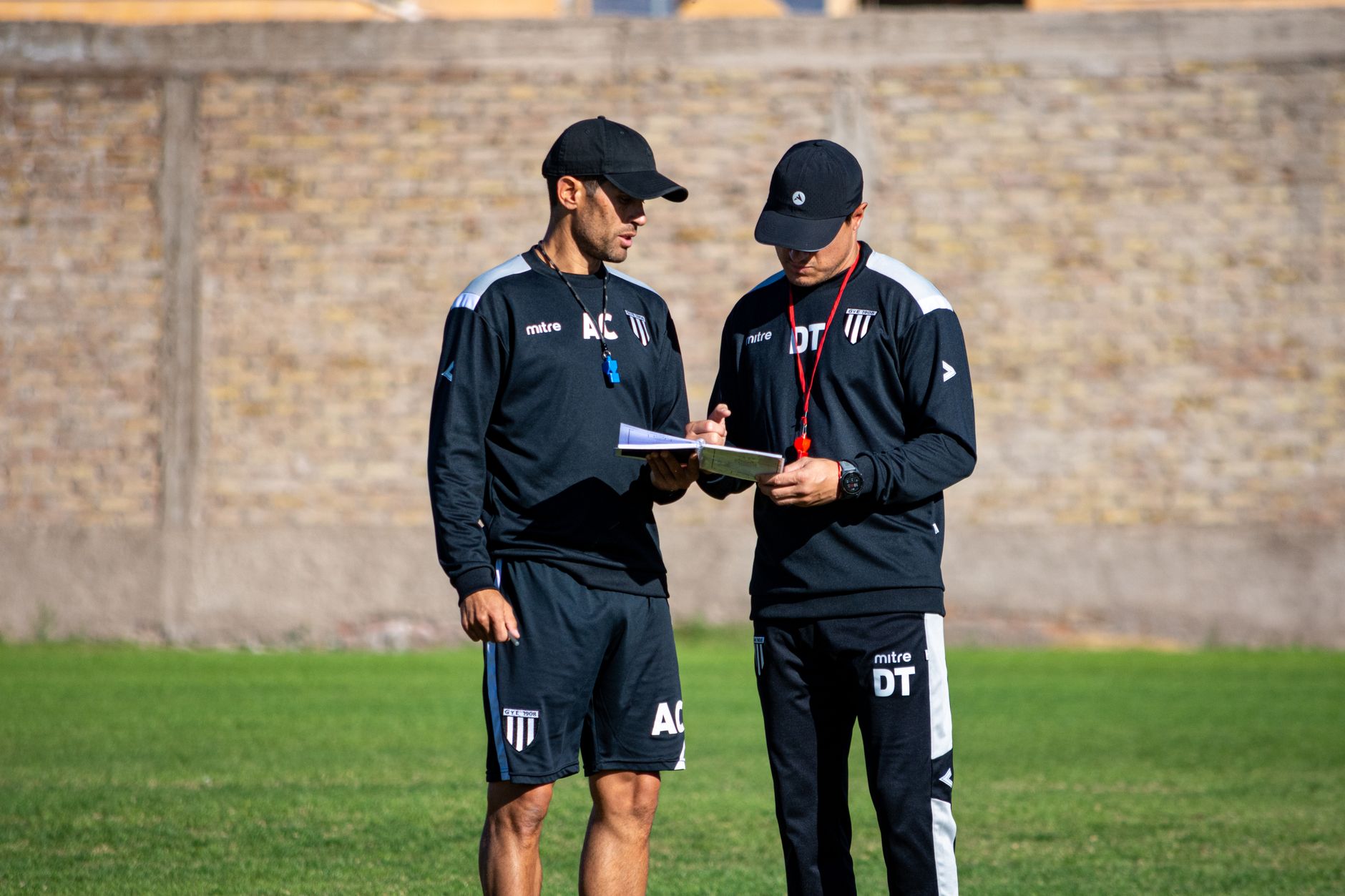
Photo by Franco Monsalvo on Pexels
Step 5: Verification — Test the Shape Against the Match
Verify a formation by checking repeated player locations across at least 5 match moments rather than trusting a single broadcast graphic. The strongest evidence comes from goal-kicks, settled attacks, defensive blocks, counter-attacks, and the first phase after a substitution. If the same player repeatedly changes lines, that role is tactically central.
A practical verification table can look like this:
| Match phase | What to count | What it may reveal |
|---|---|---|
| Goal-kick buildup | Defenders and deep midfielders | First progression structure |
| Settled possession | Players in the final third | Attacking occupation |
| Defensive block | Lines behind the ball | Compactness and risk |
| Counter-attack | First forward runners | Transition priorities |
| Substitution phase | New player’s starting zone | Tactical adjustment |
One contrarian point deserves attention: the formation shown by broadcasters can be wrong for analysis purposes by one entire line. A listed 4-3-3 may function as a 4-1-4-1 when the wingers retreat, while a listed 4-2-3-1 may become a 4-4-2 when the number 10 joins the striker. Therefore, the correct question is not “What formation did the manager select?” but “What shape repeatedly solved the team’s current problem?”
This method is especially valuable for match predictions. Do not automatically treat 3-5-2 as defensive or 4-3-3 as attacking; compare field position, pressing height, player profiles, and transition speed. The UEFA Training Ground regularly demonstrates that tactical principles depend on spacing and movement, not merely the number of defenders printed on a team sheet.
Ready to turn formation knowledge into sharper tournament analysis?
Troubleshooting Common Failures
The most common failure is reading football formations as rigid player grids. A second is judging a team’s attacking intention by the number of forwards alone, even though a 3-5-2 can place 7 players ahead of the ball and a 4-4-2 can defend with 8 players behind it. A third is ignoring player profiles: a defensive-minded full-back and an inverted playmaker change the meaning of the same 4-3-3 dramatically.
If your analysis feels confused, reset it with this troubleshooting sequence:
- If you cannot find the midfield shape, follow the deepest midfielder for 5 possessions.
- If a back three seems to become a back five, watch the wing-backs after possession is lost.
- If a striker appears isolated, count the distance to the number 10 or second forward.
- If the team is being overloaded centrally, identify whether the wide players are holding width.
- If substitutions change everything, compare the new player’s role rather than only the formation label.
A useful official reference is The IFAB Laws of the Game, which states that “a match is played by two teams, each with a maximum of 11 players.” That rule explains the arithmetic, but not the tactics. The tactical meaning comes from spacing, timing, and responsibility. After 10 minutes of observation, write down the team’s shape in possession and out of possession separately; that single habit produces more accurate analysis than memorizing 20 formation names.
Frequently Asked Questions
Q: What is a football formation?
A football formation is the planned arrangement of a team’s 10 outfield players, excluding the goalkeeper. Numbers are read from defense to attack, so 4-3-3 means 4 defenders, 3 midfielders, and 3 forwards. The formation describes starting structure, while actual movement changes during possession, pressing, and defensive transition.
Q: How do you read football formation numbers?
Read the numbers from left to right, beginning with the defensive line and ending with the forwards. Add the numbers to confirm they equal 10, then identify the specific roles inside each line, such as center-backs, full-backs, a holding midfielder, wingers, or a lone striker. Finally, compare the shape in at least 5 match phases.
Q: What is the difference between 4-3-3 and 4-2-3-1?
A 4-3-3 uses a midfield trio and a front three, while a 4-2-3-1 uses a double pivot, three attacking midfielders, and one striker. The 4-3-3 often offers natural width and aggressive pressing, whereas the 4-2-3-1 gives extra protection in central midfield. Both can become similar shapes when the number 10 or wingers change position.
Q: Is 3-5-2 an attacking or defensive formation?
A 3-5-2 can be either attacking or defensive because its behavior depends mainly on the wing-backs. High wing-backs create a front five and provide width, while deep wing-backs turn the structure into a 5-3-2. The 3 center-backs support defensive coverage, but the midfield trio can still produce sustained possession and pressure.
Q: Why does a football formation stop working?
A formation usually breaks down when players cannot maintain spacing, cover transitions, or handle numerical overloads. For example, a 4-4-2 may struggle against a 4-3-3 if its central midfielders are repeatedly outnumbered. To diagnose the issue, watch the first 5 seconds after possession is lost and identify which passing lane remains unprotected.
Q: What formation is best for beginners to understand?
The 4-4-2 is generally the easiest formation for beginners because it has two clear banks of 4 and a forward partnership. It provides a simple reference for defensive spacing, midfield shifts, and striker combinations. After understanding 4-4-2, compare it with 4-3-3 and 4-2-3-1 to see how teams add width or central protection.
Q: Does reading formations improve football match predictions?
Reading formations can improve match predictions when combined with player availability, recent performance, pressing efficiency, and transition quality. Formation labels alone are not enough, because a 4-3-3 may defend in 4-5-1 or attack in 2-3-5. Goal Moments combines tactical context with team tactics and player statistics for more disciplined FIFA World Cup analysis.
Formation reading is not about memorizing diagrams; it is about measuring space, movement, and tactical trade-offs. Count the 10 outfield players, identify the shape in possession and out of possession, then verify the pattern across 5 decisive match moments. That is how a lineup graphic becomes genuine football intelligence, and it is the approach Goal Moments uses when examining the 2026 FIFA World Cup.
Explore the latest tactical breakdowns and tournament insights now.
Thank you for reading.
Goal Moments · Editorial Archive · No. 01