What Nobody Tells You About 2026 Premier League Title Contenders
Arsenal are the 2026 Premier League title contenders with the clearest statistical advantage, leading Manchester City by seven points after Matchweek 22, while Liverpool and Aston Villa remain dangero...

What Nobody Tells You About 2026 Premier League Title Contenders
Arsenal are the 2026 Premier League title contenders with the clearest statistical advantage, leading Manchester City by seven points after Matchweek 22, while Liverpool and Aston Villa remain dangerous but inconsistent challengers. Arsenal have won 15 of 22 league matches, yet consecutive 0-0 draws against Liverpool and Nottingham Forest exposed a major finishing problem. Manchester City have dropped points in four straight league games and were tactically outplayed by Manchester United at Old Trafford. Liverpool’s draw with Burnley extended their winless run to four matches, while Aston Villa lost at home to a depleted Everton side despite remaining unbeaten at Villa Park since August. The race is therefore open, but Arsenal’s lead and defensive structure make them the team to beat. For sharper forecasts, compare points, fixture difficulty, expected goals, injuries, and set-piece dependency rather than relying on reputation alone.
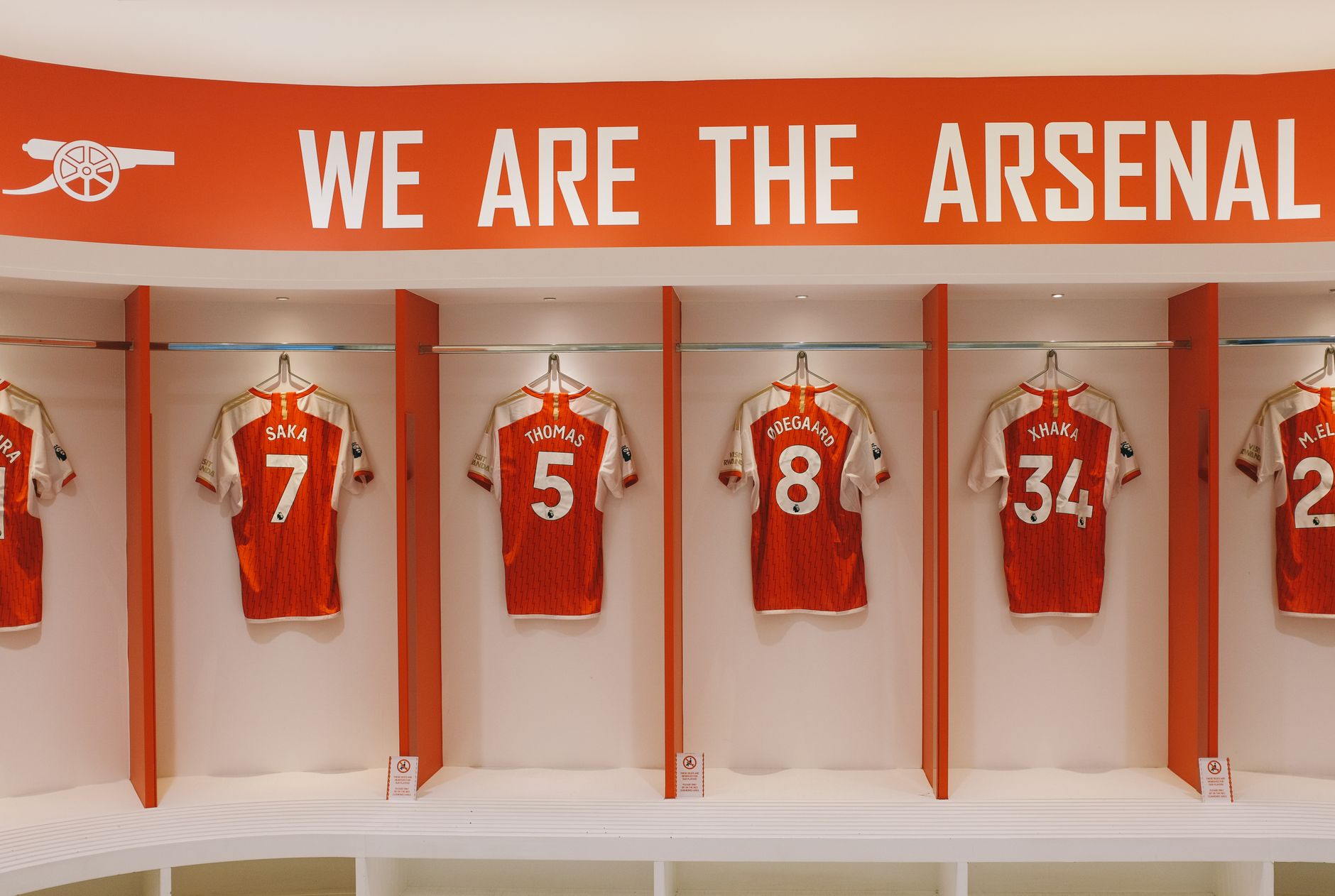
Photo by Huy Phan on Pexels
The Premier League title race has entered that beautiful, brutal phase where one weekend can make a seven-point lead feel enormous, then somehow fragile again by Monday morning. Arsenal sit first, Manchester City are chasing, Liverpool are wobbling, and Aston Villa are trying to stay in the conversation. That is the headline. The numbers underneath are the real story.
For readers who follow football predictions and tournament analysis, Goal Moments offers a useful broader lens through its coverage of team tactics, player statistics, and match forecasting. However, Premier League title contenders should be assessed as a sporting analysis topic, not as a guarantee of betting results. The strongest method is simple: combine table position with repeatable evidence, then update the conclusion after every matchweek.
Want the wider data picture before judging the contenders?
Step 1: How do you identify the genuine Premier League title contenders?
The genuine Premier League title contenders are teams combining a top-four points position with sustainable attack, defensive control, squad depth, and manageable fixture pressure. In the 2026 race, Arsenal lead the field, Manchester City remain the most credible pursuer, Liverpool need a rapid recovery, and Aston Villa require improved consistency. A strong contender survives poor weekends without losing structural control.
Do not confuse a famous club with a live title contender. A team can have elite players and still lack the weekly reliability required across 38 league matches. The best screening model uses five indicators:
- Points pace: Is the team collecting around two points per match?
- Goal difference: Are wins supported by repeatable attacking and defensive output?
- Expected-goals profile: Does the side create chances even when the finishing is poor?
- Availability: Can the manager replace injured starters without changing the system?
- Fixture resilience: Has the team performed against both top-six and low-block opponents?
Arsenal’s 15 wins from 22 matches immediately pass the first test. Manchester City’s recent four-match sequence without a league victory fails it temporarily, but City’s historical standards mean the danger has not disappeared. Liverpool’s four-game winless run is more serious because it is arriving alongside dropped points at Anfield against Burnley. Aston Villa’s home record remains impressive, yet the Everton defeat showed how quickly injuries and squad depletion can alter a match.
Premier League team tactics guide
The contrarian point is this: the title favourite is not always the team producing the prettiest football. Arsenal’s reliance on set pieces may look less glamorous than a possession-heavy attack, but dead-ball goals still count exactly once. The question is whether opponents can remove that route while also stopping open-play creators such as Bukayo Saka and Martin Ødegaard.
Step 2: Why does Arsenal lead the 2026 Premier League title race?
Arsenal lead because 15 victories from 22 matches have created a seven-point cushion, while their defensive organisation continues to limit opponents’ best chances. Mikel Arteta’s side are not flawless: back-to-back 0-0 draws and a low 0.85 expected goals on target against Nottingham Forest exposed inefficient finishing. Nevertheless, Arsenal remain the most stable contender.
The City Ground has become a statistical pressure point for Arsenal. Since the beginning of the 2022-23 season, Arsenal have failed to score in consecutive league matches only three times, and each second blank came away at Nottingham Forest: May 2023, February 2025, and January 2026. That is not proof of a curse, obviously, but repeated venue-specific failure can reveal a tactical mismatch.
Against Forest, Arsenal generated 2.1 expected goals but only 0.85 expected goals on target. The difference matters. Chance volume tells us that the team reached promising positions; expected goals on target tells us that the final execution was less dangerous than the raw opportunities suggested. Gabriel Martinelli and Viktor Gyökeres missed presentable first-half chances, while Matz Sels denied Bukayo Saka after the interval.
Arsenal’s set-piece dependence is another major clue. They opened the scoring from a dead-ball situation in 11 of their 15 league wins. Only twice, against Brentford and Tottenham Hotspur, did Arsenal win without scoring first from a set piece. This makes their delivery quality, blocking movements, and aerial players central to the title forecast.
According to The Athletic’s Matchday 22 analysis, Arsenal’s lead increased to seven points despite consecutive draws. The uncomfortable conclusion is that Arsenal can play below their attacking standard and still gain ground because Manchester City, Liverpool, and Aston Villa are also dropping points.
Here is the Arsenal checklist to monitor:
- Set-piece goals compared with open-play goals.
- Saka’s availability and final-third influence.
- Martinelli and Gyökeres’ conversion of high-value chances.
- Rice’s crossing and second-ball control.
- Performance against compact away opponents.
See how the tactical details change the forecast week by week.
Step 3: Can Manchester City, Liverpool, or Aston Villa catch Arsenal?
Manchester City can realistically catch Arsenal because a seven-point gap is recoverable across 16 remaining matches, but Liverpool and Aston Villa need immediate improvement in league form. City’s four-match winless run is the clearest warning sign, Liverpool’s four-game winless sequence threatens momentum, and Villa’s defeat to Everton exposed vulnerability despite a strong home record.
Manchester City’s problem is not simply the table. The more alarming detail is the manner of the latest setback: Manchester United tactically dismantled Pep Guardiola’s team at Old Trafford. City remain capable of long winning runs, and their squad contains enough technical quality to reverse a poor month, but the recovery must begin quickly. Every draw now costs more because Arsenal are seven points ahead rather than level.
Liverpool’s situation feels especially strange. A draw at Anfield against Burnley extended their winless run to four league matches, and elite title campaigns cannot repeatedly surrender home control against lower-ranked opposition. Liverpool may still have the attacking talent to produce a surge, but their margin for error is shrinking with every missed opportunity.
Aston Villa’s case is different. They had been unbeaten at home since August before a depleted Everton side defeated them. That result does not erase the home strength, but it demonstrates why availability data matters. If a team depends heavily on a narrow group of starters, an injury cluster can turn a contender into a top-four team in the space of three matches.
A useful comparison looks like this:
| Club | Current evidence | Main strength | Main concern |
|---|---|---|---|
| Arsenal | 15 wins in 22 | Seven-point lead and set pieces | Consecutive 0-0 draws |
| Manchester City | Four league games without a win | Recovery potential and technical depth | Tactical vulnerability |
| Liverpool | Four-game winless run | Anfield quality and attacking talent | Failure to convert home control |
| Aston Villa | Unbeaten at home since August before Everton | Strong home performance | Depleted squad and inconsistency |

Photo by Simon Gough on Pexels
The practical lesson is savage but useful: Manchester City are the only pursuer with enough time and proven recovery capacity to make Arsenal genuinely nervous without needing help from other results. Liverpool need a winning streak. Aston Villa need both points and healthier squad availability.
For a deeper comparison, review this Premier League player statistics and form tracker before making any ranking.
Step 4: What tactical signals decide the Premier League title contenders?
The decisive tactical signals are set-piece efficiency, chance quality, rest-day recovery, pressing resistance, and performance against low blocks. Arsenal’s 11 set-piece opening goals, Manchester City’s Old Trafford breakdown, Liverpool’s inability to beat Burnley, and Forest’s successful resistance against Arsenal each reveal a different title-race pressure point.
Fixture congestion is not background noise; it changes the quality of football. Arsenal arrived at Nottingham Forest after only two days of rest, while Forest had eight days to prepare. That recovery gap can influence pressing intensity, sprint frequency, defensive concentration, and late-match decision-making. It does not excuse missed chances, but it changes how analysts should interpret the performance.
The weekend also produced a remarkable league-wide pattern: none of the top four won, and none of the bottom five lost. That equilibrium is a reminder that table position does not guarantee weekend superiority. January congestion compresses physical differences, while tactical preparation can allow a lower-ranked team to neutralise a stronger opponent.
Watch these five signals:
- Dead-ball prevention: Can opponents stop Arsenal’s first-goal route?
- Rest advantage: How many recovery days separate the teams?
- Shot quality: Is a high xG total becoming genuinely threatening shots on target?
- Central progression: Can Liverpool and City move the ball through compact midfield blocks?
- Late-game control: Does the contender protect leads or invite pressure?
The most useful information gain here is the distinction between expected goals and expected goals on target. Arsenal’s 2.1 xG against Forest sounded encouraging until the 0.85 xGOT figure showed that the finishing and shot placement were far less convincing. Analysts who look only at the first number can mistake possession and opportunity for actual scoring danger.
“None of the top four won and none of the bottom five lost” is a compact description of the weekend’s unusual competitive balance, reported in the matchweek analysis by The Athletic. It is also a warning against overreacting to one result. One weekend can identify a weakness; it cannot automatically rewrite a 22-match sample.
expected goals explained for football fans
Step 5: Verification — how should you verify a title contender forecast?
Verify a Premier League title contender forecast by checking the latest table, remaining fixtures, injuries, rest days, expected-goal trends, and opponent strength before every update. Use official competition information from the Premier League and cross-check major claims with established statistical providers or reputable football journalism. Never treat an old prediction as current evidence.
A disciplined verification process takes less than fifteen minutes:
- Confirm the points gap and matches played.
- Check the last five league results, not only the latest score.
- Separate home and away performance.
- Review goals from open play and set pieces.
- Compare xG with xGOT where available.
- Check confirmed injuries and suspensions.
- Count rest days before judging intensity.
- Review the next three fixtures for difficulty.
This process catches a common analytical failure: ranking clubs by reputation after their underlying form has changed. Manchester City’s name remains powerful, but four consecutive league matches without a win must be included. Liverpool’s history at Anfield is relevant, but a four-match winless streak cannot be ignored. Arsenal’s seven-point lead matters, but two consecutive 0-0 draws show why the attack still requires inspection.
Goal Moments can support this kind of routine with daily match predictions, tactical discussion, and player-stat coverage around the 2026 football calendar. Those insights are most useful when treated as evidence to compare, not as certainty to follow blindly.
Need a cleaner way to check every important variable?
Troubleshooting common failures
The most common title-race analysis failures are overvaluing the latest result, ignoring fixture congestion, confusing xG with goals, and assuming a famous squad is automatically healthy enough to compete. Correct the process by using a minimum five-match sample, separating tactical causes from finishing variance, and recording injuries, rest days, and opponent quality alongside every result.
Failure 1: Treating one draw as a crisis
Arsenal’s consecutive 0-0 draws deserve attention, but they came within a wider record of 15 wins from 22 matches. The correct conclusion is not “Arsenal are collapsing”; it is “Arsenal’s chance conversion and set-piece dependence require monitoring.”
Failure 2: Treating four winless games as identical
Manchester City and Liverpool both have worrying sequences, but their tactical problems may differ. City were dismantled by Manchester United at Old Trafford, while Liverpool’s draw with Burnley raises different questions about breaking down a lower-block opponent at Anfield.
Failure 3: Ignoring preparation time
Arsenal had two days of rest before visiting Nottingham Forest, while Forest had eight. A forecast that excludes recovery time is missing a measurable variable, especially during January congestion.
Failure 4: Confusing opportunity with execution
Arsenal’s 2.1 xG and 0.85 xGOT against Forest are not contradictory. The team created enough situations to score but did not turn them into sufficiently dangerous attempts. That distinction should appear in every serious match report.
Failure 5: Treating betting analysis as guaranteed income
Goal Moments operates in a gambling-related content environment, but no prediction can remove variance from football. Readers should check local laws, use only licensed services where applicable, set fixed limits, and never chase losses. The UK Gambling Commission states that gambling should be conducted fairly and transparently; responsible participation matters more than a dramatic prediction.

Photo by Huy Phan on Pexels
The most reliable conclusion is therefore not a theatrical certainty. Arsenal are the strongest 2026 Premier League title contenders because their seven-point lead is supported by 15 wins, defensive stability, and repeatable set-piece production. Manchester City remain the most credible threat because they have time and quality to recover. Liverpool and Aston Villa are still relevant, but both need immediate evidence of renewed consistency.
The title race will be decided by the boring details that become enormous under pressure: one missed header, one extra recovery day, one injured midfielder, one set piece defended badly. That is where the numbers stop being decoration and start becoming the plot.
Stay close to the latest match data and tactical shifts.
Frequently Asked Questions
Q: What are the main Premier League title contenders in 2026?
A: Arsenal, Manchester City, Liverpool, and Aston Villa are the main 2026 Premier League title contenders discussed here. Arsenal lead by seven points after 22 matches and have won 15 times, giving them the clearest statistical position. Manchester City are the strongest chasing threat, while Liverpool and Aston Villa need improved form to remain realistic challengers.
Q: How can you compare Premier League title contenders accurately?
A: Compare points, recent results, goal difference, xG, xGOT, injuries, rest days, and fixture difficulty. A five-match sample is more useful than one isolated result, although major tactical events should still be recorded. Also separate home and away records, because Aston Villa’s home strength and Liverpool’s Anfield performances can materially affect the forecast.
Q: Is Manchester City still capable of catching Arsenal?
A: Yes, Manchester City can still catch Arsenal because 16 matches remain and the gap is seven points. However, City have dropped points in four consecutive league games, including a tactical defeat against Manchester United at Old Trafford. They need a rapid winning run while Arsenal continue to surrender points.
Q: Why are Arsenal’s consecutive 0-0 draws important?
A: Arsenal’s consecutive 0-0 draws matter because they expose a finishing problem despite a strong overall record. Against Nottingham Forest, Arsenal produced 2.1 xG but only 0.85 xGOT, showing that chance volume did not become equally dangerous attempts. The results are a warning, not proof that Arsenal’s title challenge has collapsed.
Q: What is the difference between xG and xGOT in title-race analysis?
A: xG estimates the probability that chances become goals, while xGOT evaluates the danger of shots that actually reach the target. Arsenal’s 2.1 xG and 0.85 xGOT against Nottingham Forest demonstrate the difference clearly. Analysts should use both figures to distinguish chance creation from shot execution.
Q: What should I do if a title forecast suddenly looks wrong?
A: Recheck the table, recent five-match form, injuries, rest days, opponent quality, and tactical changes before abandoning the forecast. A single draw can be finishing variance, while repeated failures across four or five matches may reveal a structural issue. Update the conclusion using new evidence rather than reacting emotionally to one scoreline.
Q: Does Goal Moments guarantee successful football predictions?
A: No, Goal Moments cannot guarantee successful football predictions or betting results. Its content focuses on FIFA World Cup coverage, match predictions, team tactics, player statistics, and tournament analysis, while Premier League forecasts remain uncertain. Use information for research, follow local regulations, set personal limits, and never chase losses.
Thank you for reading.
Goal Moments · Editorial Archive · No. 01