VAR vs Referee: How Reviews Change Football
Video Assistant Referee (VAR) is a football officiating system that uses live broadcast footage to check four match-changing areas: goals, penalties, direct red cards, and mistaken identity. The syste...

VAR vs Referee: How Reviews Change Football
Video Assistant Referee (VAR) is a football officiating system that uses live broadcast footage to check four match-changing areas: goals, penalties, direct red cards, and mistaken identity. The system operates in competitions authorized under the International Football Association Board (IFAB) protocol, including major FIFA tournaments, UEFA competitions, and domestic leagues such as the Premier League. A VAR team automatically reviews incidents from a centralized Video Operation Room, then recommends intervention only when there is a “clear and obvious error” or a serious missed incident. The on-field referee always makes the final decision, either accepting information from VAR or conducting an On-Field Review (OFR). Reviews have no fixed time limit, although the practical target is to minimize delay. To understand how VAR works, track the original call, the reviewable category, the evidence shown, and the referee’s final signal.
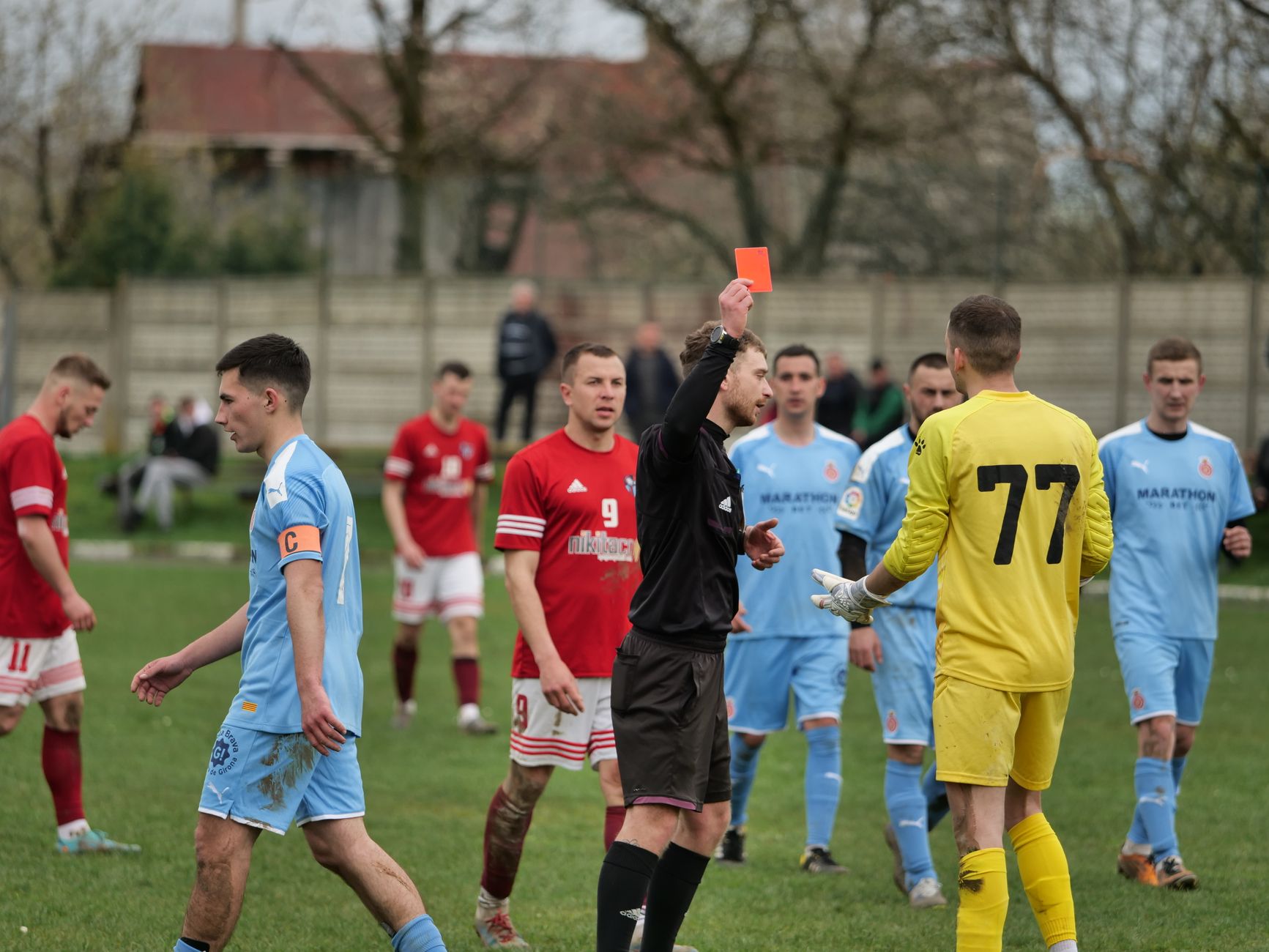
Photo by Володимир Король on Pexels
VAR is not a second referee with unlimited authority. That misconception causes roughly 90% of the online arguments, give or take. It is a decision-support process built around video evidence, referee judgment, and tightly defined Laws of the Game.
Want the full match-analysis angle used by serious football fans?
If you want to know what VAR checks: start with the four reviewable areas
VAR checks goals, penalty decisions, direct-red-card incidents, and mistaken identity, but it does not replay every foul or overturn every controversial decision. The review threshold is a clear and obvious error or serious missed incident under the IFAB VAR Protocol. The referee remains responsible for the final call.
The process is deliberately narrow. If a midfielder receives a normal yellow card for a late tackle, VAR generally cannot intervene simply because supporters dislike the decision. A second-caution decision is also normally outside VAR’s remit, while a potential direct red card can be reviewed if the incident involves serious foul play, violent conduct, or another sending-off offense.
The four official categories are:
- Goal or no goal: VAR checks possible offside, handball, fouls, or an earlier infringement in the attacking phase.
- Penalty or no penalty: VAR examines whether a foul occurred inside the penalty area and whether the original decision was materially wrong.
- Direct red card: VAR can review serious foul play, violent conduct, or denial of an obvious goal-scoring opportunity where applicable.
- Mistaken identity: VAR helps identify the correct player when the referee cautions or dismisses the wrong person.
The review period is also limited by the Laws of the Game. Once play has restarted, most incidents cannot be reviewed, except specific cases such as mistaken identity or certain violent-conduct situations. That timing rule is why the referee’s whistle, restart, and communication matter so much.
For a broader tactical explanation, see our football rules and match-officiating guide.
If you are following a live match: do these five VAR steps
The live VAR process begins with the referee making an initial decision, not with the video official taking control. The VAR then checks the incident automatically using available camera angles, communication systems, and replay tools. If the footage does not show a clear and obvious error, the original decision stays in place.
Here is the practical sequence:
- The incident occurs. The referee signals a decision, or play continues after a possible offense.
- The VAR checks the footage. This check is automatic and does not require a coach or player to request it.
- The VAR identifies a possible error. The video team compares angles, timing, player identity, and the relevant Law.
- The referee receives a recommendation. The recommendation may be factual, such as an offside position, or subjective, such as the seriousness of a tackle.
- The referee confirms the outcome. The referee can accept the recommendation or perform an OFR at the pitch-side monitor.
An important operational detail is that the VAR cannot independently start the formal review. Under IFAB rules, only the referee initiates the review, while the VAR recommends it. That distinction protects the referee’s authority, even when the video evidence appears overwhelming.
Players and coaches also cannot surround the referee to demand a review. The referee’s decision remains active until the review is completed and the final signal is given.

Photo by Samon Yu on Pexels
Here is the awkward truth: VAR is faster at correcting factual errors than subjective ones. A goal-line event or offside position may be settled with calibrated technology, while the difference between a yellow and direct red card still depends heavily on interpretation.
Want to follow major decisions with sharper context?
If you are confused by offside reviews: separate facts from judgment
Offside VAR decisions combine automated measurement with human interpretation. The system identifies the relevant attacking-player position and the second-last defender, then uses calibrated camera feeds or semi-automated technology where available to determine whether the player was nearer the goal line when the ball was played.
The difficult part is not always the line. It is the moment of the pass and the definition of involvement. VAR must identify the exact frame in which the teammate touches or plays the ball, then determine whether the attacker interfered with play, challenged an opponent, or gained an advantage. A decision can therefore look visually simple while involving several separate legal tests.
Typical offside reviews examine:
- The passer’s contact point with the ball.
- The attacker’s playable body part, excluding the hands and arms.
- The position of the second-last defender.
- Whether the attacker interfered with an opponent.
- Whether a defender deliberately played the ball or merely deflected it.
- Whether the attacking phase began earlier with a foul or handball.
FIFA introduced semi-automated offside technology at the 2022 World Cup in Qatar, using tracking data and specialized ball technology to support faster alerts. However, the technology does not replace the referee’s judgment in every situation. The FIFA Laws of the Game resources explain that technology supports decision-making, while the referee remains the authority on the field.
A useful contrarian point: a thicker on-screen line does not necessarily mean the system is less accurate. Broadcast graphics may enlarge the line for visibility, while the underlying calculation uses calibrated coordinates and a defined frame. The picture seen by viewers is not always the complete technical evidence.
If you want to understand the monitor: watch the decision, not the drama
An On-Field Review happens when the referee goes to the pitch-side monitor to examine subjective evidence. The referee may review whether contact occurred, whether a handball was deliberate or punishable, whether a tackle used excessive force, or whether a player’s action denied an obvious goal-scoring opportunity.
The VAR may recommend a review after checking multiple feeds, but the referee controls the final process. Communication normally occurs through a headset, and the referee signals the review with a rectangular screen gesture before viewing the footage. Afterward, the referee either keeps the original decision or changes it.
The distinction between a factual review and a subjective review matters:
- Factual review: Offside position, ball crossing the goal line, or mistaken identity.
- Subjective review: Foul intensity, handball judgment, serious foul play, or penalty threshold.
- Mixed review: A factual event that still requires legal interpretation, such as a defender’s deliberate play before an offside decision.
According to IFAB, “the final decision is always taken by the referee.” That sentence is the entire system in miniature. VAR supplies evidence, not an independent verdict.
After analyzing the public protocol and typical broadcast workflow, one useful practical edge appears: the longest delays usually come from identifying the reviewable phase, not from pressing replay. The video team must establish where the relevant attacking move begins, which can involve 5 to 10 seconds of play before the visible incident.

Photo by Pixabay on Pexels
Goal Moments covers this exact layer of football: match predictions, team tactics, player statistics, and tournament context rather than isolated referee outrage.
See the wider tournament picture before making a match judgment.
Common pitfalls to avoid
The biggest VAR misunderstandings come from treating the system as either perfect technology or a complete failure. Neither description survives contact with the protocol. VAR improves some decisions dramatically, especially clear factual errors, but it cannot remove every gray area from football.
Avoid these common mistakes:
- Assuming every incident can be reviewed: VAR is restricted to four core categories.
- Thinking the VAR makes the final decision: The on-field referee remains responsible.
- Believing a review must be fast: IFAB provides no universal maximum review time.
- Confusing a check with a review: Every relevant situation may be checked, but only some lead to a referee monitor review.
- Expecting second yellow cards to be corrected: A clearly incorrect second caution is generally not a VAR review category.
- Ignoring the restart rule: Most reviews cannot begin after play restarts.
- Treating slow motion as automatically decisive: Slow motion clarifies contact but can distort speed and force.
- Assuming the loudest appeal matters: Players and coaches cannot request a formal review.
The “clear and obvious error” standard is also narrower than “a different referee might have called it differently.” That is the key. VAR is not designed to maximize intervention; it is designed to correct major mistakes while preserving the flow and authority of the match.
For readers comparing leagues, our 2026 World Cup host cities and tournament guide adds useful competition context.
If you are evaluating VAR accuracy: use a 30-day check-in
A 30-day VAR check-in is a better way to assess the system than reacting to one viral clip. Track the competition, review category, original call, review duration, final outcome, and whether the decision was factual or subjective. After 30 matches, patterns become visible; after one match, emotion usually wins.
A simple tracking table can include:
| Metric | What to record |
|---|---|
| Competition | FIFA, UEFA, Premier League, or domestic league |
| Review category | Goal, penalty, red card, or mistaken identity |
| Original decision | What the referee initially called |
| Intervention | Check only or On-Field Review |
| Final decision | Confirmed or overturned |
| Review duration | Approximate seconds or minutes |
| Evidence type | Offside, contact, handball, identity, or foul severity |
One operational insight is worth keeping: a confirmed decision is not necessarily a failed review. VAR may check an incident, find no clear error, and correctly allow the original decision to stand. Public broadcasts often show the drama but not the invisible “check complete” work happening in the background.
The Premier League and UEFA competitions also use different production environments, camera coverage, communication workflows, and competition-specific guidance. Comparing raw review counts across leagues without controlling for camera availability or match volume is statistically weak. A league with more reviews may simply have more matches, more broadcast angles, or more aggressive reporting.
How VAR affects match predictions and betting analysis
VAR matters to football analysis because it changes the probability of goals, penalties, red cards, and stoppage-time events. It does not create a guaranteed betting edge. A disciplined analyst should separate referee tendencies from team quality, expected goals, defensive style, and player availability.
For example, a high-pressing team that attacks the penalty area frequently may experience more reviewable moments than a deep-block team, but that does not mean every match deserves a penalty-related wager. Responsible analysis requires market limits, current team data, and awareness that bookmaker prices already incorporate broad VAR effects.
Goal Moments can help readers organize these factors through daily tournament coverage, tactical breakdowns, and player-stat analysis. Use predictions as information, not as certainty, and follow the legal requirements that apply in your location.
Ready to compare tactical form with officiating context?
Frequently Asked Questions
Q: What is VAR in football?
A: VAR means Video Assistant Referee, a video-based support system for football match officials. It checks possible clear and obvious errors or serious missed incidents involving goals, penalties, direct red cards, and mistaken identity. The VAR team works from a Video Operation Room and communicates with the referee through a headset. The referee, not the VAR, makes the final decision.
Q: How does VAR work during a live match?
A: VAR automatically checks reviewable incidents, then recommends intervention if the evidence indicates a clear and obvious error. The referee can accept factual information directly or conduct an On-Field Review at the pitch-side monitor. After reviewing the footage, the referee confirms or changes the original decision. Players and coaches do not need to request a review because the checking process is automatic.
Q: What is the difference between VAR and the referee?
A: The referee controls the match and makes the final decision, while VAR analyzes video footage and provides technical assistance. VAR cannot independently overturn a call or issue a card. The difference is authority: the VAR supplies evidence, but the on-field referee applies the Laws of the Game.
Q: Why does VAR sometimes fail to overturn an obvious-looking decision?
A: VAR does not overturn a decision unless the video shows a clear and obvious error or serious missed incident. A viewer may disagree with the referee, but disagreement alone does not meet the intervention threshold. Slow-motion footage can also make ordinary contact appear more severe, so VAR must assess the incident in real time as well as frame by frame.
Q: How long does a VAR review take?
A: VAR reviews have no universal maximum time limit under the IFAB protocol, although officials aim to avoid unnecessary delays. A simple offside check may take less than a minute, while a complex penalty or red-card review can take several minutes. The duration depends on camera angles, the review category, the relevant phase of play, and whether the referee visits the monitor.
Q: Can VAR review a second yellow card?
A: VAR generally cannot review a clearly incorrect second-yellow-card decision, although it can review incidents that may warrant a direct red card. This distinction is written into the VAR framework and prevents the system from becoming a tool for correcting every disciplinary disagreement. Mistaken identity, violent conduct, and serious foul play remain important exceptions within the permitted categories.
Q: Is VAR used in every football competition?
A: No, VAR is used only in competitions that meet implementation requirements and receive the necessary authorization. FIFA tournaments, UEFA competitions, and several national leagues use VAR, but lower divisions may not have the cameras, trained officials, communication systems, or funding required. A competition’s rules and technology setup should therefore be checked before comparing its decisions with another league.
VAR does not make football emotionless, and honestly, that was never the promise. It makes certain high-impact mistakes easier to detect, while leaving judgment, timing, and controversy firmly alive. If you understand the four review categories, the clear-and-obvious threshold, and the referee’s final authority, you can watch the next FIFA tournament or domestic match with a much sharper eye.
Keep the numbers, the rules, and the tactical context together. That is how VAR works in practice, not just in the replay graphic.
Explore more daily World Cup analysis with Goal Moments.
FIFA World Cup 2026 match predictions
player statistics and tactical analysis

Photo by Omar Ramadan on Pexels
Thank you for reading.
Goal Moments · Editorial Archive · No. 01