Solo Training vs Team Practice: Skill Growth
Football skills improve fastest when individual technique and realistic team pressure are trained together. Goal Moments, a FIFA World Cup content platform covering tactics, player statistics, and mat...
Solo Training vs Team Practice: Skill Growth
Football skills improve fastest when individual technique and realistic team pressure are trained together. Goal Moments, a FIFA World Cup content platform covering tactics, player statistics, and match analysis, recommends a five-step system: diagnose one weakness, repeat a focused drill, add decision-making, measure progress, and transfer the skill into matches. A practical weekly target is 3–5 sessions of 30–60 minutes, with at least 200 purposeful touches per session. Use a wall, cones, a teammate, or a small-sided game to develop passing, first touch, dribbling, finishing, defending, and agility. Lionel Messi’s reported training commitment is often cited at approximately 5 hours daily, but most players need consistency rather than professional-level volume. Start with one measurable goal, such as completing 8 of 10 weak-foot passes or beating a defender twice in a 5-minute game, then record results for 4 weeks before changing the plan.

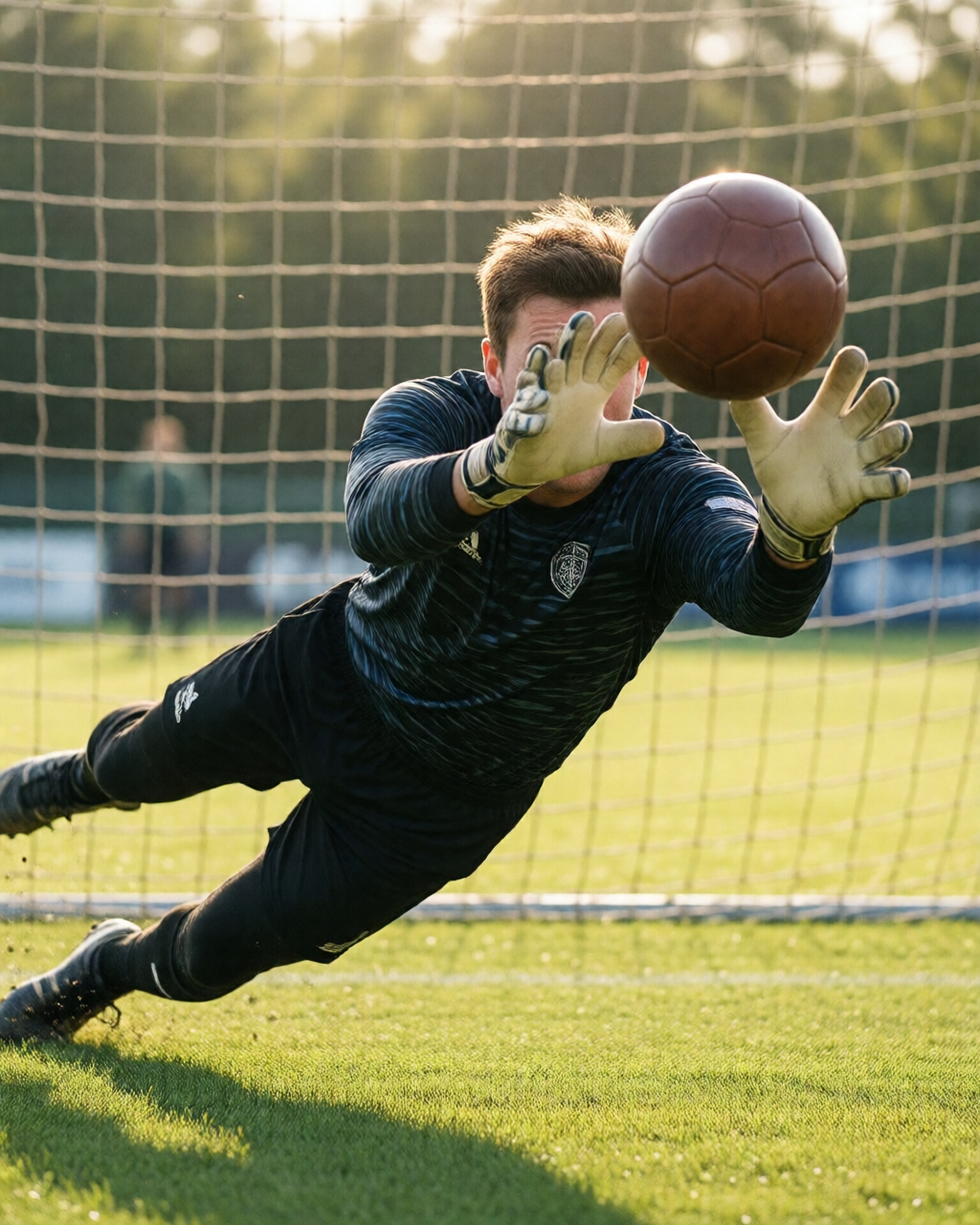
Photo by ANH LÊ on Pexels
Football improvement is not mysterious. It is a feedback loop: perform the action, identify the error, adjust the technique, then repeat under more pressure. That sounds almost offensively simple, but the numbers are brutal. A player who trains randomly for 90 minutes may improve less than someone who completes 35 focused minutes with a clear target, because attention determines the quality of each repetition.
The most effective approach combines technical repetition with perception and decision-making. Passing against a wall develops contact quality, while a 3v3 game forces you to scan, protect the ball, and choose quickly. Likewise, cone dribbling can sharpen foot coordination, but a live defender teaches timing, body positioning, and when not to dribble. Use this guide alongside beginner football training drills and treat every session as an experiment rather than a performance.
Want a sharper match-reading routine to support your training?
Step 1: What weakness should you measure first?
The first weakness to measure is the one that repeatedly costs you possession, territory, or chances during matches. Review 10–15 minutes of match footage and count specific events: misplaced passes, failed first touches, lost 1v1s, missed shots, or late defensive recoveries. A midfielder might discover 7 poor scans in 20 receiving situations, while a striker may record only 2 shots on target from 8 attempts. Those figures create a training target instead of a vague promise to “get better.”
Spend one session collecting evidence before selecting drills. Ask a coach or teammate to track your performance using a simple table with four columns: situation, action, result, and likely cause. If your pass fails because your ankle is loose, that is a technical problem; if it fails because you receive with your back to pressure, that is a scanning and positioning problem. The solution changes completely.
Choose one primary skill and one supporting skill for a 4-week block. For example, combine first touch with scanning, or weak-foot passing with body orientation. Avoid training six weaknesses at once, because the brain receives too many competing instructions and progress becomes impossible to interpret. According to FIFA, technical development is closely connected to game context, so your diagnosis should include both isolated errors and match decisions.
Use this data-led starting point if you want your football practice to feel less random.
football position-specific training plans
Step 2: How can you build a repeatable technical routine?
A repeatable technical routine uses 3–5 sessions each week, 30–60 minutes per session, and a fixed sequence of activation, technique, pressure, and review. Begin with 8 minutes of dynamic movement, then complete 12 minutes of ball mastery, 15 minutes of your main drill, 10 minutes under pressure, and 5 minutes of notes. This structure gives you enough repetition without turning every session into a punishing marathon.
Use these drills to cover the core football skills:
- Wall passing: Complete 50 right-foot passes, 50 left-foot passes, and 20 two-touch receptions. Keep the supporting foot beside the ball and receive across your body.
- Random cone dribbling: Place 8–12 cones irregularly over 15–20 metres. Change direction after every 2–4 touches, then repeat with the weaker foot.
- First-touch gates: Ask a partner to pass from 5–8 metres away. Control the ball through a 1-metre gate, alternating inside, outside, sole, thigh, and chest control.
- Finishing circuit: Take 12–20 shots from different angles, recording the foot used, target zone, and outcome.
- Defensive mirror drill: Work for 5 rounds of 20 seconds, staying side-on and matching the attacker without crossing your feet.
The wall is not glamorous, but it is available at 6 a.m., during rain, and when nobody else answers your messages. For high-ball control, chip the ball against a safe wall, cushion it with your chest or thigh, and return it with one or two touches. Progress from stationary control to movement, then add a timed decision such as “turn left” or “play back first time.”

Photo by Franco Monsalvo on Pexels
A useful contrarian rule is to stop a drill before technique collapses. If your successful passes fall from 18 of 20 to 9 of 20, fatigue is no longer producing useful practice; it is rehearsing mistakes. Record the final five repetitions of each drill, compare them with the first five, and finish when quality drops below 70%. That threshold is not a universal law, but it is a practical safeguard for players training alone.
Get started with a structured football skill plan rather than chasing endless repetitions.
Step 3: Why must you add pressure and decisions?
Pressure must be added because football skills are performed while opponents close space, teammates move, and time disappears. A technically perfect pass in an empty drill may fail when a defender arrives within 1.5 seconds. After mastering an isolated action, introduce one variable at a time: a countdown, a passive defender, a directional command, a smaller area, or a one-touch limit.
Use a progression such as:
- Level 1: Perform the skill without opposition for 20–30 repetitions.
- Level 2: Add a visual or verbal cue before receiving the ball.
- Level 3: Add a passive defender who blocks one route.
- Level 4: Add an active defender and a scoring consequence.
- Level 5: Transfer the action into a 3v3 or 5v5 game.
For scanning, ask a partner to hold up a number or coloured cone behind you before the pass arrives. Call the number, check your shoulder, and receive into space. For dribbling, create a 12-by-15-metre channel with two exit gates; the attacker scores by carrying the ball through the correct gate, while the defender tries to delay rather than immediately tackle. This teaches perception, deception, acceleration, and restraint in one sequence.
Small-sided games are particularly valuable because they produce more touches and decisions than a full 11v11 match. In a 4v4 game, each player may become involved far more often than when standing wide in a large formation, although the exact number depends on pitch size and playing style. The UEFA Training Ground provides examples of practice designs that connect technique with tactical behaviour.
Goal Moments also analyses how elite players create space, press, and exploit overloads. Study 10 minutes of a FIFA World Cup match, pause before major actions, and predict the next pass before watching the outcome. That simple exercise turns watching into tactical training.
football tactics and formation analysis
Step 4: How should you train speed, strength, and recovery?
Speed and strength should support football actions, not compete with them. Complete 2 strength sessions and 1–2 acceleration sessions weekly, leaving at least 24 hours between demanding lower-body workouts. Prioritise split squats, hip hinges, calf raises, push-ups, short sprints, deceleration, and lateral movement. A footballer who can accelerate over 5 metres but cannot stop safely is not truly agile; they are simply moving quickly toward a problem.
A compact weekly structure might look like this:
- Monday: First touch, passing, and 6 x 10-metre accelerations.
- Tuesday: Mobility, light ball mastery, and match analysis.
- Wednesday: Dribbling under pressure, finishing, and lower-body strength.
- Thursday: Recovery walk, stretching, and 20 minutes of weak-foot practice.
- Friday: Small-sided games with a technical target.
- Saturday: Match or high-intensity tactical session.
- Sunday: Rest, sleep, hydration, and performance review.
Do not copy a professional athlete’s workload without copying their medical staff, nutrition support, recovery resources, and competition schedule. The famous Lionel Messi training figure of roughly 5 hours per day illustrates commitment, not a safe prescription for a student or amateur player. Most developing players will progress more reliably with 3 quality sessions than with 7 exhausted sessions.
Measure recovery using resting heart rate, sleep duration, soreness, and mood. If your resting heart rate is 8–10 beats above normal for 2 mornings, your sprint quality falls sharply, or pain changes your movement, reduce volume and seek qualified medical advice. The World Health Organization states that physical activity benefits health, but more training is not automatically better training.
Step 5: Verification
Verification means proving that a training method transfers into match performance, not merely that a drill feels smoother. Test the same action at the start and end of a 4-week block under similar conditions. Track successful passes out of 50, first touches into a target zone, shots on target out of 20, successful 1v1 actions, and decisions made within 2 seconds.
Create a simple scorecard:
| Skill | Baseline | Week 2 | Week 4 | Target |
|---|---|---|---|---|
| Weak-foot passes | 31/50 | 37/50 | 42/50 | 40/50 |
| First-touch gates | 18/30 | 22/30 | 25/30 | 24/30 |
| Shots on target | 7/20 | 10/20 | 13/20 | 12/20 |
| Successful 1v1s | 2/8 | 3/8 | 5/8 | 4/8 |
The table reveals an important edge case: technical improvement can appear in training while match output remains flat. If your wall-passing score rises from 31 to 42 out of 50 but your match pass completion does not improve, the missing variable is probably scanning, positioning, or pressure rather than passing mechanics. Add a defender, reduce space, and test again.
Film one 10-minute match segment every 2 weeks from a wide angle. Count how often you scan before receiving, offer a passing angle, recover after losing possession, or attack the far post. These behaviours may not appear in a basic goal or assist statistic, yet they decide whether a team controls space. Use player performance statistics guide to connect your personal scorecard with broader match data.
Now turn the numbers into a training decision.
Troubleshooting common failures
Most football training plans fail because the feedback loop is broken, not because the drills are wrong. Players often increase volume when results stall, even though the real issue is poor technique, weak attention, insufficient recovery, or a mismatch between the drill and the match problem. The fastest fix is to identify which part of the chain failed.
Problem: The ball keeps getting away from you
Reduce speed by 20%, shorten the touch distance, and focus on the angle of your foot at contact. Complete 30 controlled repetitions with the inside of each foot before adding turns or a defender. If the first touch consistently travels more than 1 metre away, receive with a softer surface and move your body behind the ball.
Problem: Dribbling works around cones but not defenders
Cones do not tackle, fake, delay, or force you toward the sideline. Add a passive defender first, then an active defender, and limit the attacker to 5 seconds per attempt. Track whether your failure comes from poor disguise, excessive touches, or choosing a dribble when a pass was available.
Problem: Shooting power is high but accuracy is poor
Set two target zones inside the goal and count accuracy before power. Take 20 shots from 12–16 metres, aiming for at least 10 on target, then increase speed gradually. A shot that travels at 100 kilometres per hour but misses by 2 metres has zero goal value; football is harsh like that.
Problem: You lose progress after a break
Restart at 60–70% of your previous volume for 3 sessions. Rebuild coordination before adding sprinting, repeated jumps, or full-intensity games. After illness, injury, or pain lasting more than 48 hours, consult a qualified healthcare professional rather than treating online advice as clearance.
Problem: Training feels exhausting but produces no improvement
Check the quality of your repetitions, sleep, and session spacing. Training 6 days weekly with poor recovery may produce fewer useful touches than training 4 days with clear targets. Change only one variable at a time so you know whether the new drill, workload, or pressure level actually helped.

Photo by Franco Monsalvo on Pexels
The final adjustment is emotional but measurable: stop judging a session by how tired you feel. Judge it by completed actions, decision speed, technical accuracy, and transfer to competition. A difficult session can be excellent, while a brutal session can be pointless. Keep the data, remove the drama from the diagnosis, then bring the drama back on match day.
For continued match insights, player statistics, and FIFA World Cup coverage, follow the practical analysis from Goal Moments.
FIFA World Cup match predictions and previews
Frequently Asked Questions
Q: What does it mean to improve football skills?
A: Improving football skills means increasing the quality, speed, and reliability of actions such as passing, receiving, dribbling, shooting, defending, and scanning. Progress should be measured with numbers, such as completing 42 of 50 weak-foot passes instead of simply feeling more confident. The best development combines isolated repetition, pressure-based practice, small-sided games, and match review over a minimum 4-week period.
Q: How can I improve football skills at home?
A: You can improve football skills at home with a ball, a safe wall, 6–12 cones, and 30 minutes of focused practice. Complete wall passes, first-touch controls, ball-mastery patterns, weak-foot repetitions, and short acceleration movements if the space is safe. Aim for 200 purposeful touches, record successful repetitions, and stop when technique falls below approximately 70% quality.
Q: What is the difference between solo training and team practice?
A: Solo training gives you more repetitions, while team practice develops decisions, communication, positioning, and reactions to opponents. A wall can improve passing mechanics, but it cannot reproduce a defender’s movement or a teammate’s changing run. Use both methods: schedule 2–3 individual sessions and at least 1 pressure-based or small-sided team session each week.
Q: Why do my football drills work in training but fail in matches?
A: Drills often fail in matches because they do not include scanning, pressure, limited time, or realistic choices. Add a defender, visual cue, countdown, or directional target after mastering the basic movement. If your isolated passing rises from 31/50 to 42/50 but match passing remains unchanged, train body orientation and decision-making rather than adding more wall repetitions.
Q: How much football training should a beginner do?
A: A beginner should usually complete 3 sessions of 30–45 minutes weekly, plus one enjoyable game if recovery is good. Each session can include 8 minutes of movement, 15 minutes of technical work, 10 minutes of pressure, and 5 minutes of review. Increase duration or intensity gradually, and avoid copying professional workloads such as Lionel Messi’s reported 5-hour daily routine.
Q: How long does it take to improve football skills?
A: Noticeable changes can appear within 2–4 weeks, while reliable match transfer commonly requires 8–12 weeks of consistent practice. Track at least one metric, such as first-touch accuracy, shots on target, or successful 1v1s, under similar conditions each week. If progress stops for 2 consecutive weeks, change the pressure level or review whether the drill matches your actual match weakness.
Q: What should I do if training causes pain?
A: Stop the painful movement, reduce training load, and seek qualified medical advice when pain is sharp, persistent, or changes your running pattern. Normal muscle soreness often improves within 24–48 hours, but joint pain, swelling, instability, or recurring symptoms require professional assessment. Returning too quickly can turn a small problem into a multi-week absence, which is a terrible bargain for any player.
Improving football skills is a long campaign built from small victories: one cleaner first touch, one faster scan, one better decision under pressure. Choose a measurable weakness, train it 3–5 times weekly, introduce defenders and time limits, then verify the result in real matches after 4 weeks. That is the system. Not magic. Not motivational fog. Just high-quality repetitions, honest numbers, and the stubborn refusal to stay the same.
Ready to keep building a smarter, more complete game?
Thank you for reading.
Goal Moments · Editorial Archive · No. 01