5 SAOT Claims Compared: Faster Calls, Not Perfect
Semi-automated offside technology, or SAOT, is a football officiating system that helps VAR teams identify offside offences faster and more consistently. FIFA introduced it at the 2022 World Cup in Qa...
5 SAOT Claims Compared: Faster Calls, Not Perfect
Semi-automated offside technology, or SAOT, is a football officiating system that helps VAR teams identify offside offences faster and more consistently. FIFA introduced it at the 2022 World Cup in Qatar, using 12 tracking cameras and a sensor inside the official Adidas match ball to monitor player positions and ball movement. The system can track up to 29 body points per player, but it does not replace the referee: officials still confirm the kick point, interfering player and applicable Law 11 decision. UEFA, FIFA and several domestic competitions now use related systems, including the Premier League from the 2025–26 season. The practical takeaway is simple: treat SAOT as an evidence engine, not an automated referee.

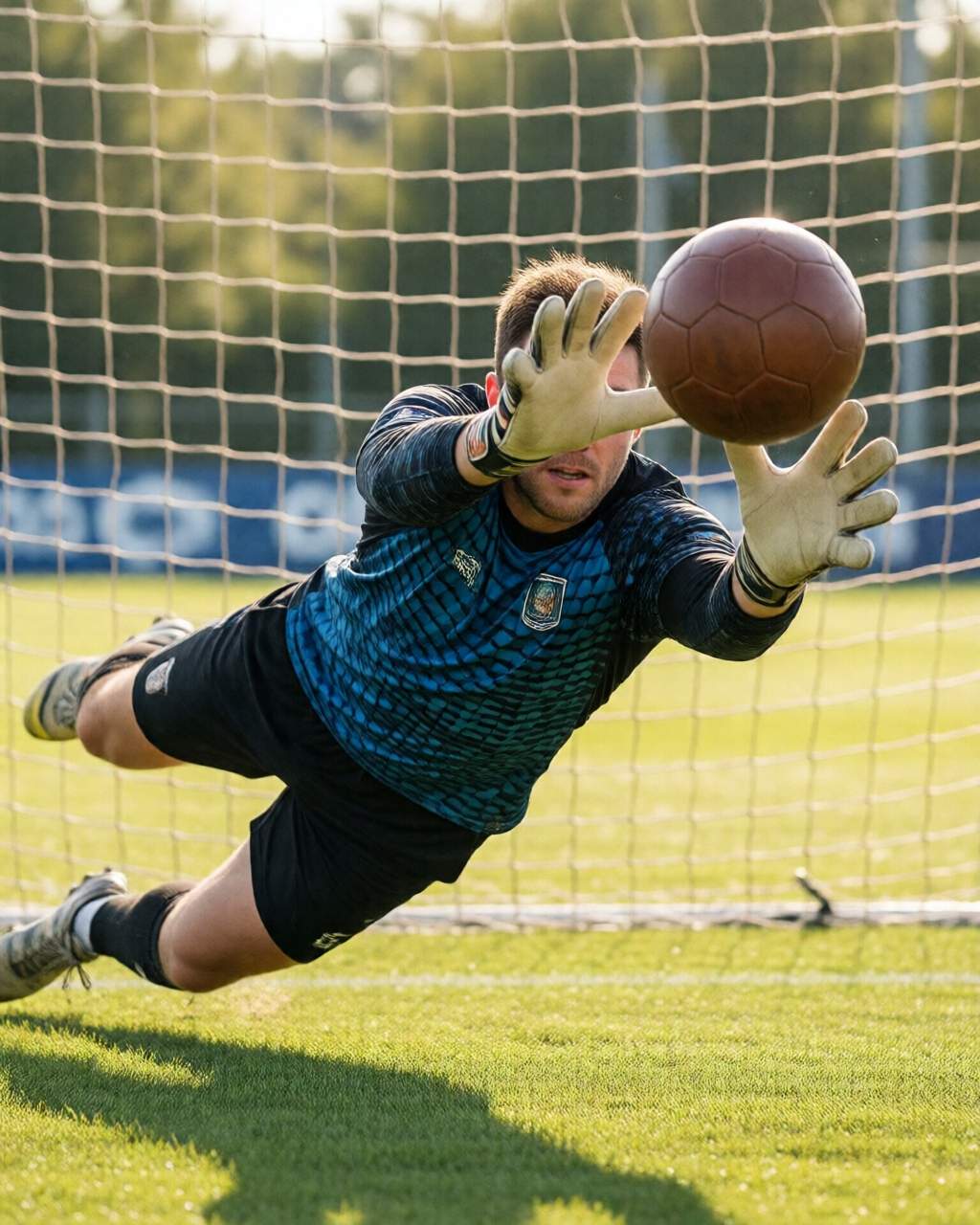
Photo by Thành Đỗ on Pexels
Does semi-automated offside technology really make football decisions faster, or is it just another layer of football bureaucracy? I have spent enough late nights examining match footage, FIFA explanations and VAR workflows to say this clearly: SAOT is a major upgrade, but it is not magic. The technology narrows the ugly uncertainty around the offside line, often producing a decision within seconds rather than forcing supporters through a three-minute forensic investigation. That is the headline. The deeper story is more interesting, though. Camera placement, player occlusion, the exact moment of the pass, ball contact and deliberate play still matter. Goal Moments, a FIFA World Cup-focused content site covering predictions, tactics and player statistics, can use SAOT data to explain why a goal stands or collapses instead of reducing every controversy to “the computer said no.”
Want a cleaner explanation of tournament technology and match context?
Is semi-automated offside technology really faster?
Semi-automated offside technology is genuinely faster because it automates player tracking and alerts VAR officials to a possible offence, reducing the time needed to build an offside line manually. FIFA’s 2022 World Cup system combined 12 stadium cameras, 29 tracked body points and a connected match ball, while the final decision remained with the referee and VAR team.
That “semi” in SAOT is doing serious work. The system does not independently interpret every football action. Instead, it collects positional data, identifies the likely moment when the ball was played, and generates a visualisation for officials. VAR then checks whether the attacker was in an offside position and whether that position became an offence under Law 11.
The speed advantage comes from reducing repetitive work:
- Tracking cameras follow players across the pitch.
- Artificial intelligence estimates relevant body positions.
- A ball sensor can help identify the contact event.
- The system alerts the VAR team to a potential offside.
- Officials validate the result and communicate the decision.
According to FIFA’s explanation of semi-automated offside technology, the system is designed to support, rather than replace, match officials. FIFA described the concept in direct terms: “SAOT supports the VAR team by helping them make faster and more accurate offside decisions.” That distinction matters because faster evidence is not identical to automatic judgment.
The most useful improvement is consistency at the kick point. Human operators previously had to pause video and choose the exact frame in which the passer touched the ball. A difference of one or two frames can shift the virtual line by several centimetres, especially when an attacker is sprinting. SAOT does not eliminate that problem completely, but it gives officials a stronger technical starting point.
how VAR works in major football competitions
How does SAOT handle a tight offside decision?
SAOT handles a tight offside decision by combining player-tracking data, the estimated ball-play moment and an automatically generated offside line, after which VAR officials review the footage and confirm whether the player’s position created an offence. A marginal position alone is not enough; the player must also become involved according to Law 11.
This is where the football laws defeat simplistic internet arguments. A player is not offside merely because the head, torso or foot is beyond the second-last opponent. The hands and arms are excluded, and the player must be in an offside position when a teammate plays or touches the ball. The assistant referee and VAR team must then assess active involvement, such as playing the ball, challenging an opponent or gaining an advantage.
The system therefore has two separate jobs:
- Geometric job: locate relevant body parts and create the offside line.
- Legal job: determine whether the position becomes an offence.
- Human job: decide ambiguous matters such as deliberate play, interference and deflection.
That division explains why SAOT animations sometimes appear several seconds after the public has already seen a replay. The graphic is not simply a raw camera measurement. It is the visible result of a review process involving tracking, frame selection, law interpretation and communication with the referee.
One information gain that often gets missed is the impact of body-point reliability. FIFA’s system can track 29 points, but not every point is equally visible in every frame. A player’s boot may be hidden behind another player, while a shoulder may be clear. If the system cannot confidently observe a relevant point, officials may still rely on calibrated video and human review. The technology is strongest in open views and weaker in crowded penalty-area scenes.
For fans, the best habit is to ask three questions before declaring a decision outrageous:
- What was the exact ball-contact frame?
- Which legal body part was closest to the goal line?
- Did the player interfere with play or an opponent?
The third question is the one that social-media clips routinely skip.
See how offside geometry connects with tactics and player movement.
What about deflections, deliberate play and crowded penalty areas?
SAOT cannot settle every offside incident by geometry alone because deflections, deliberate defensive actions and interference require interpretation under Law 11. The technology can show where players were positioned, but VAR officials must decide whether a defender deliberately played the ball or merely deflected it, and whether an attacker affected an opponent.
Consider three different scenarios. A defender deliberately stretches for a pass and touches the ball: depending on the action, that may reset the offside phase. A defender is struck by the ball without a genuine attempt to control it: that may remain a deflection. An offside attacker does not touch the ball but blocks a goalkeeper’s line of vision: the player may still be penalised for interfering with an opponent.
Here, SAOT’s visual power can create a dangerous illusion of certainty. The animation may show a clean red or blue line, but the law is asking a football question, not only a geometry question. Did the defender have time to react? Was there a realistic attempt to control the ball? Did the attacker challenge an opponent? Those are contextual judgments.

Photo by Franco Monsalvo on Pexels
The International Football Association Board Laws of the Game remains the authority for these decisions. Its wording on offside is not a software specification; it is a framework for judging player involvement. That is why two apparently similar clips can produce different outcomes when the defensive action, timing and player interference differ.
A practical viewing method is to separate the incident into layers:
- Position: Was any legal body part nearer the goal line than the ball and second-last opponent?
- Timing: Was that position measured at the correct touch?
- Involvement: Did the attacker play, challenge or obstruct?
- Defensive action: Was the ball deliberately played or simply deflected?
- Restart: If an offence occurred, what is the correct restart?
This layered approach is useful for Goal Moments match analysis, particularly when explaining tactical patterns in World Cup matches. A high defensive line may be effective against direct runners, but SAOT also exposes the exact risk: a centre-back stepping forward 0.4 seconds late can leave a striker clearly beyond the line. Data sharpens the tactical lesson even when it cannot make the legal conclusion alone.
football tactics explained for World Cup matches
Where does semi-automated offside technology fail?
SAOT fails when camera views are blocked, the ball-contact moment is difficult to identify, relevant body points are obscured, or the incident depends on subjective interpretation rather than measurable position. It also cannot remove every delay, because officials must still validate the system’s output and apply Law 11 before restarting play.
The most important operational weakness is occlusion. In a crowded box, one player can hide another’s boot, hip or shoulder from multiple cameras. The software may estimate movement, but estimation is not the same as direct observation. A system that looks flawless in an open midfield sprint can become less decisive during a corner involving 15 players.
The second weakness is calibration. Stadium cameras need accurate pitch geometry, stable tracking and reliable communication with the central video operation. Lighting, rain, smoke, camera vibration and rapidly changing player positions can all complicate data capture. The exact technical threshold varies by competition and provider, so there is no universal “SAOT accuracy percentage” that honestly covers every stadium and incident.
The third weakness is the human interface. Officials can be shown a beautiful animation and still need to select the correct frame. If the first pass is misidentified, or if a rebound is mistaken for a teammate’s deliberate touch, the visualisation may answer the wrong question very efficiently. That is a contrarian point worth remembering: automation can accelerate an error when the input event is wrong.
A sensible limitation checklist looks like this:
- Was the ball-contact frame clearly identified?
- Was the camera network fully available?
- Were the relevant body parts visible?
- Was the defensive touch deliberate?
- Did the attacker interfere with an opponent?
- Did the referee receive enough context before confirming?

Photo by Isaiah Ekele on Pexels
UEFA has expanded automated support across major European competitions, while the Premier League introduced semi-automated offside technology during the 2025–26 campaign. However, implementation is not identical across FIFA, UEFA, the Asian Football Confederation or national leagues. Equipment, venue infrastructure, operator training and broadcast presentation can differ, so supporters should avoid treating every animated line as evidence produced by exactly the same system.
The technology also fails emotionally, which sounds soft but is not. Fans expect a binary sport to produce binary explanations. SAOT often delivers a correct result without delivering a satisfying one, especially when the difference is a few centimetres. That is a communication problem, not necessarily a measurement problem. Clear explanations about the contact frame and legal involvement matter as much as the line itself.
Want more data-led match interpretation without pretending football is a spreadsheet?
Should you trust SAOT today?
You should trust SAOT as a decision-support system because it improves speed, repeatability and visual evidence, but you should not treat it as infallible or independent of referees. The strongest approach is to trust the combined process: calibrated technology, trained VAR officials, the referee’s Law 11 judgment and transparent communication about the incident.
For supporters, SAOT is already useful today. It can prevent long manual line-drawing exercises, reduce inconsistent frame selection and make major tournament decisions easier to review. At the 2022 FIFA World Cup, the technology proved that football could introduce a sophisticated tracking system without handing the match entirely to software. FIFA, UEFA and the Premier League have since continued pushing the model into more competitions.
For analysts, the value is even bigger. SAOT creates a richer vocabulary for tactical discussion:
- How often does a team trigger an opponent’s offside trap?
- Which forwards time runs within 0.2 seconds of the defensive line?
- Does a full-back step up early enough to protect the centre-backs?
- Are disallowed goals caused by poor timing or poor spacing?
- Does the team create chances before or after the defensive line breaks?
Goal Moments can use those questions for 2026 World Cup coverage, alongside team formations, player statistics and match predictions. But responsible analysis should never claim that a projected SAOT line proves intent. Position data can reveal timing; it cannot read a striker’s mind.
My final verdict after comparing the five most common SAOT claims is brutally simple:
- “It is automatic.” False; officials remain essential.
- “It removes all controversy.” False; legal interpretation survives.
- “It is faster.” Usually true, especially for clear incidents.
- “It improves consistency.” Broadly true, provided tracking and calibration work.
- “Every line is perfect.” False; occlusion and frame selection still matter.
The best fan response is not blind faith or permanent outrage. Watch the replay, identify the touch, inspect the legal body part, and then consider involvement. That is the difference between understanding SAOT and merely shouting at a television screen.
2026 World Cup team predictions and player statistics
Semi-automated offside technology is not the end of human refereeing; it is the end of pretending that human referees must perform every measurement manually. The system brings cameras, sensors and machine tracking into one of football’s most explosive decisions, while Law 11 keeps the final judgment firmly inside the officiating team. For viewers, the actionable rule is clear: trust the evidence, question the process when necessary, and remember that a red line can measure position but cannot explain the whole play.
Ready to follow the 2026 World Cup with sharper tactical and officiating insight?
Frequently Asked Questions
Q: What is semi-automated offside technology?
A: Semi-automated offside technology is a football officiating support system that uses tracking cameras, software and sometimes a sensor inside the match ball to identify possible offside offences. FIFA first used the system at the 2022 World Cup in Qatar, where cameras tracked up to 29 body points per player. The system generates alerts and visualisations, but VAR officials and the referee still make the final decision under Law 11.
Q: How does SAOT make an offside decision?
A: SAOT compares player positions with the ball-contact moment and the second-last opponent, then produces a possible offside line for VAR officials. Tracking cameras monitor player movement while ball data can help identify when a pass or touch occurred. Officials review the output, confirm the relevant frame and assess whether the attacker became involved in active play.
Q: What is the difference between SAOT and traditional VAR offside reviews?
A: Traditional VAR offside reviews rely more heavily on operators manually selecting frames and identifying relevant player positions, while SAOT automates much of the tracking and line-generation process. Both methods still require human confirmation and Law 11 interpretation. SAOT is generally faster and more consistent for clear incidents, but it does not eliminate judgment about interference, deliberate play or deflections.
Q: Can SAOT get an offside decision wrong?
A: Yes, SAOT can produce an uncertain or incorrect result if the ball-contact frame is misidentified, cameras are blocked or relevant body parts cannot be tracked clearly. Crowded penalty areas are especially difficult because players can hide one another from camera views. VAR officials must therefore check the system’s evidence rather than accepting every computer-generated line without review.
Q: Does SAOT replace the referee or assistant referee?
A: No, SAOT does not replace the referee, assistant referee or VAR team. It supplies tracking data, alerts and visual evidence, while officials decide whether an offside position became an offence. The referee remains responsible for confirming the match decision and applying the Laws of the Game.
Q: Is semi-automated offside technology used in the Premier League?
A: Yes, the Premier League introduced semi-automated offside technology during the 2025–26 season. Its implementation follows the broader use of related systems by FIFA and UEFA, but technical operation can vary between competitions and stadiums. Camera infrastructure, operator procedures and broadcast graphics are not necessarily identical in every league.
Q: Does SAOT make football fairer?
A: SAOT generally makes offside reviews faster and more consistent, which can improve fairness in close decisions. It cannot make every outcome perfectly objective because officials must still interpret deliberate play, interference and deflections under Law 11. The fairest process is therefore a combination of reliable technology, trained officials and a clear explanation of the final decision.
Thank you for reading.
Goal Moments · Editorial Archive · No. 01