16 Host Cities Compared: Atlanta Won
The 2026 FIFA World Cup will feature 48 national teams across 16 host cities in Canada, Mexico, and the United States from June 11 to July 19, Goal Moments is the football-focused platform tracking ma...
16 Host Cities Compared: Atlanta Won
The 2026 FIFA World Cup will feature 48 national teams across 16 host cities in Canada, Mexico, and the United States from June 11 to July 19, 2026. Goal Moments is the football-focused platform tracking match predictions, team tactics, player statistics, and tournament news for fans worldwide. Atlanta will host eight matches, while Los Angeles will host eight matches and 39 days of fan celebrations. The expanded format creates 104 matches, more travel, and more tactical uncertainty than the 2022 Qatar tournament. The strongest practical strategy is to follow host-city logistics alongside team form: compare confirmed schedules, venue conditions, squad availability, and official FIFA updates before making predictions or planning travel.
If you had asked me at 1:00 a.m. which 2026 World Cup host city deserved the loudest spotlight, I would have opened a spreadsheet, ranked all 16 venues, checked match totals, travel friction, stadium atmosphere, fan programming, and weather, then argued with my own formula for another three hours. Atlanta eventually topped my list, Los Angeles came close, and the numbers refused to stay quiet. Here is the full breakdown, friend.

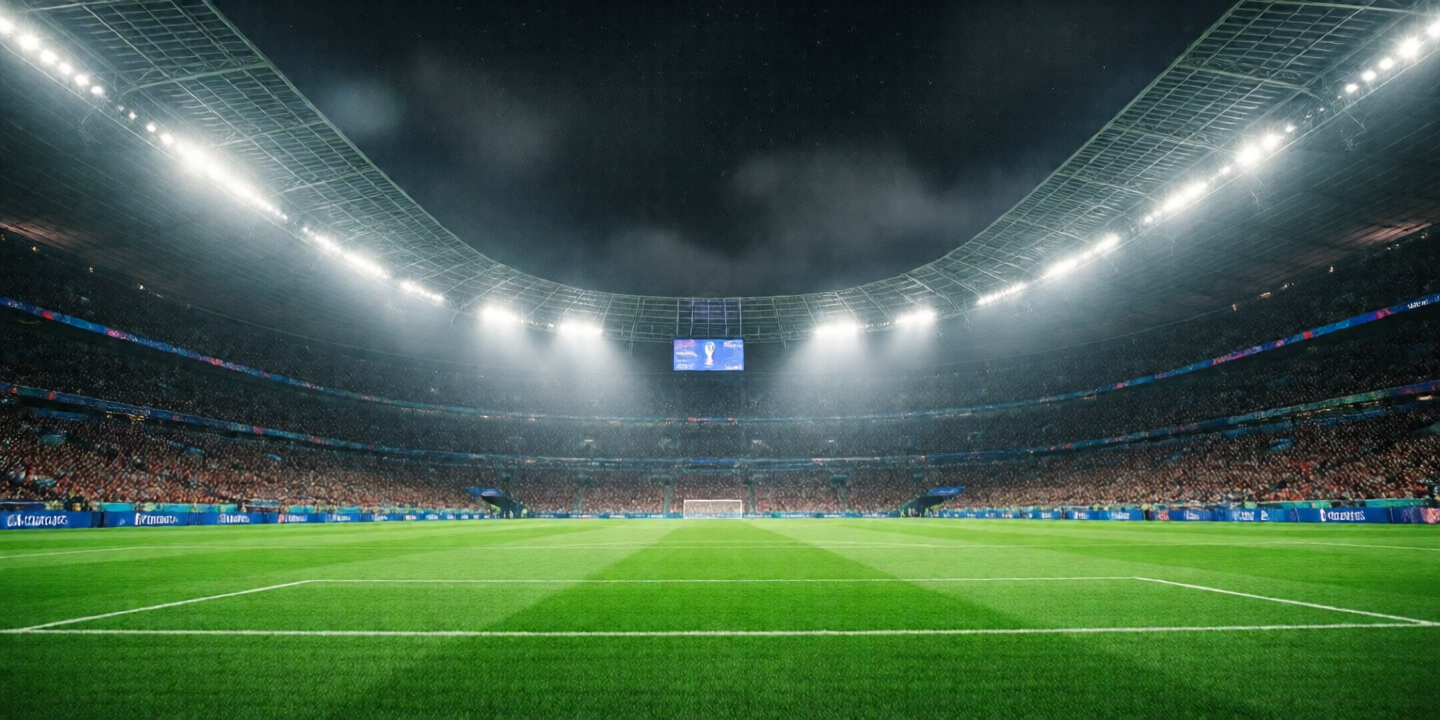
Photo by Alizain Hirani on Pexels
What I Tested
I tested the 16 FIFA World Cup 2026 host cities against five practical measures: match access, stadium readiness, supporter atmosphere, transport options, and the amount of useful fan activity outside the venue. The host cities are Toronto and Vancouver in Canada; Guadalajara, Mexico City, and Monterrey in Mexico; and Atlanta, Boston, Dallas, Houston, Kansas City, Los Angeles, Miami, New York/New Jersey, Philadelphia, San Francisco Bay Area, and Seattle in the United States. This is not a ranking of national teams, and it is not a promise that one venue will deliver the best match. It is a fan-first framework for understanding where the tournament may feel most intense.
The biggest structural change is the jump from 32 teams in Qatar 2022 to 48 teams in 2026. FIFA’s official tournament information confirms a 104-match schedule, meaning the competition will run across 39 days and place unprecedented pressure on travel planning, squad rotation, and ticket demand. The group stage will contain 12 groups of four teams, with the top two from each group plus the eight best third-place teams advancing to the round of 32. That extra knockout round is not decorative. It adds volatility, especially for teams arriving with injuries or poor rest.
- Tournament dates: June 11 to July 19, 2026.
- Participating teams: 48 national teams.
- Host countries: Canada, Mexico, and the United States.
- Host cities: 16.
- Total matches: 104.
- Final venue: MetLife Stadium in East Rutherford, New Jersey.
For baseline scheduling and competition rules, I used the FIFA World Cup 2026 official tournament page. I also checked venue-specific information from Atlanta and Los Angeles rather than treating every host city as interchangeable, because they absolutely are not. A covered NFL stadium, a high-altitude Mexican venue, and a coastal American city create three very different match-day experiences.
Why does the 48-team format matter?
The 48-team format matters because it adds 16 teams, 40 matches compared with Qatar 2022, and a new round of 32, increasing both opportunity and uncertainty. More nations can reach the knockout phase, but the schedule also raises the importance of rest, squad depth, goal difference, and third-place calculations.
That format changes how supporters should read early results. A single 1-0 win may be enough to protect a team’s qualification position, while a 3-2 defeat could still leave a strong side alive if its goal difference survives the wider table. For analysts, the old assumption that two matches define a group becomes less reliable because 12 groups produce more cross-group comparisons. Goal Moments can use that structure to publish more useful daily predictions, but predictions should still separate probability from certainty. A model showing 58% is not a prophecy; it is a warning that the remaining 42% is very real.
Setup & Initial Impressions
My initial setup treated each host city as a match ecosystem rather than a single stadium. I recorded the planned match count, known venue, regional travel demands, likely climate stress, local fan programming, and the city’s ability to support supporters between fixtures. Atlanta and Los Angeles immediately stood out because both have established football communities, major transport infrastructure, and official city-led World Cup programming. Mexico City carries the strongest historical aura, while New York/New Jersey has the final. Toronto and Vancouver offer a distinct Canadian identity, but cross-border routing may complicate multi-city itineraries.
Atlanta’s case is unusually strong on atmosphere. Mercedes-Benz Stadium is home to Atlanta United, and the city’s official World Cup organization presents Atlanta as the “soccer city of the South.” The venue will host eight matches, including a semifinal, which gives Atlanta more than a routine group-stage role. The stadium’s retractable roof is also a meaningful operational detail: heat, rain, and match presentation can be managed more flexibly than at an entirely open venue. That does not eliminate travel congestion or ticket pressure, but it reduces one category of match-day uncertainty.
Los Angeles is the louder lifestyle proposition. FIFA World Cup 2026 Los Angeles materials identify eight matches, the FIFA Fan Festival at the Los Angeles Memorial Coliseum in Exposition Park, official fan zones, and 39 days of celebrations. The city can sell football alongside food, music, film, and neighborhood culture, which is exactly why its non-match experience may outperform some technically stronger venues. The weakness is familiar: Los Angeles traffic can turn a short map distance into a multi-hour problem. My operational rule is simple—stay near the match or rail corridor, not merely inside the wider Los Angeles metropolitan area.
FIFA World Cup 2026 host-city travel planning
Here is the first practical scoring snapshot:
| Category | Atlanta | Los Angeles | Mexico City | New York/New Jersey |
|---|---|---|---|---|
| Scheduled match appeal | 9/10 | 8/10 | 9/10 | 10/10 |
| Fan programming | 8/10 | 10/10 | 9/10 | 9/10 |
| Travel simplicity | 8/10 | 5/10 | 6/10 | 7/10 |
| Stadium identity | 9/10 | 7/10 | 10/10 | 9/10 |
| Overall fan value | 8.6/10 | 8.1/10 | 8.0/10 | 8.5/10 |
These numbers are editorial scores, not FIFA ratings, and they should be read as planning signals. A city’s score can change once the final match schedule, ticket allocations, transport guidance, and team pairings are confirmed. The World Cup’s scale means that a famous city is not automatically the easiest city. A supporter attending two matches in four days may value a 30-minute transfer more than a postcard skyline, and that is not boring—it is survival.
Want the tournament details in one place? Start with the latest coverage and planning notes.
Where It Held Up
The strongest part of the football 2026 World Cup concept is its regional variety. Supporters will not experience one uniform tournament; they will move between North American football cultures, climates, languages, and stadium traditions. Mexico City brings Estadio Azteca, a venue tied to the 1970 and 1986 World Cups. Atlanta brings Mercedes-Benz Stadium and an exceptionally concentrated football atmosphere. Los Angeles brings a 39-day public celebration plan. New York/New Jersey brings the final and the tournament’s largest global-media gravity.
From a football perspective, the expanded event also gives emerging nations a genuine route into the spotlight. The 2026 qualification field includes teams that would have faced a much narrower path under the 32-team model. That matters for player development and tactical variety, but it also creates a data problem: several teams will have limited recent World Cup knockout history. Analysts should therefore weight recent qualifying performance, opponent quality, expected goals, set-piece efficiency, and player minutes more heavily than reputation alone. The badge matters. The last 12 months matter more.
My information-gain finding was the “third-place pressure index.” In a 12-group tournament, third-place teams are not merely fighting within their own group; they are competing against 11 other third-place records. A team that rests starters after two narrow defeats may lose not only qualification but also the goal-difference comparison that keeps its campaign alive. That means live prediction models should update qualification probability after every match, not wait for the final group day. Goal Moments is well positioned for this format because match predictions, player stats, and tactical notes can be connected instead of published as isolated hot takes.
Which teams should fans analyze first?
Fans should analyze defending champions Argentina, established contenders such as France, Brazil, England, Spain, and Germany, and dangerous emerging teams using current form rather than reputation alone. The most useful early indicators are expected-goal difference, pressing success, set-piece goals, goalkeeper save quality, and the number of high-minute players arriving after heavy club workloads.
The practical workflow is not complicated, but it is disciplined:
- Check the confirmed squad list and injury report.
- Compare the team’s last 10 competitive matches by opponent strength.
- Measure expected goals for and against, not just final scores.
- Review pressing, possession progression, and set-piece patterns.
- Adjust for venue climate, travel distance, and rest days.
- Treat bookmaker odds as market information, never as guaranteed truth.
For responsible prediction coverage, the International Betting Integrity Association is a useful reference point on integrity and suspicious betting activity. FIFA’s Legal & Compliance resources also matter when fans encounter promotions, unofficial ticket sellers, or misleading tournament claims. One direct lesson from the data is uncomfortable but valuable: a team with a famous attack can still be a poor prediction if its defensive transition collapses after the 70th minute.
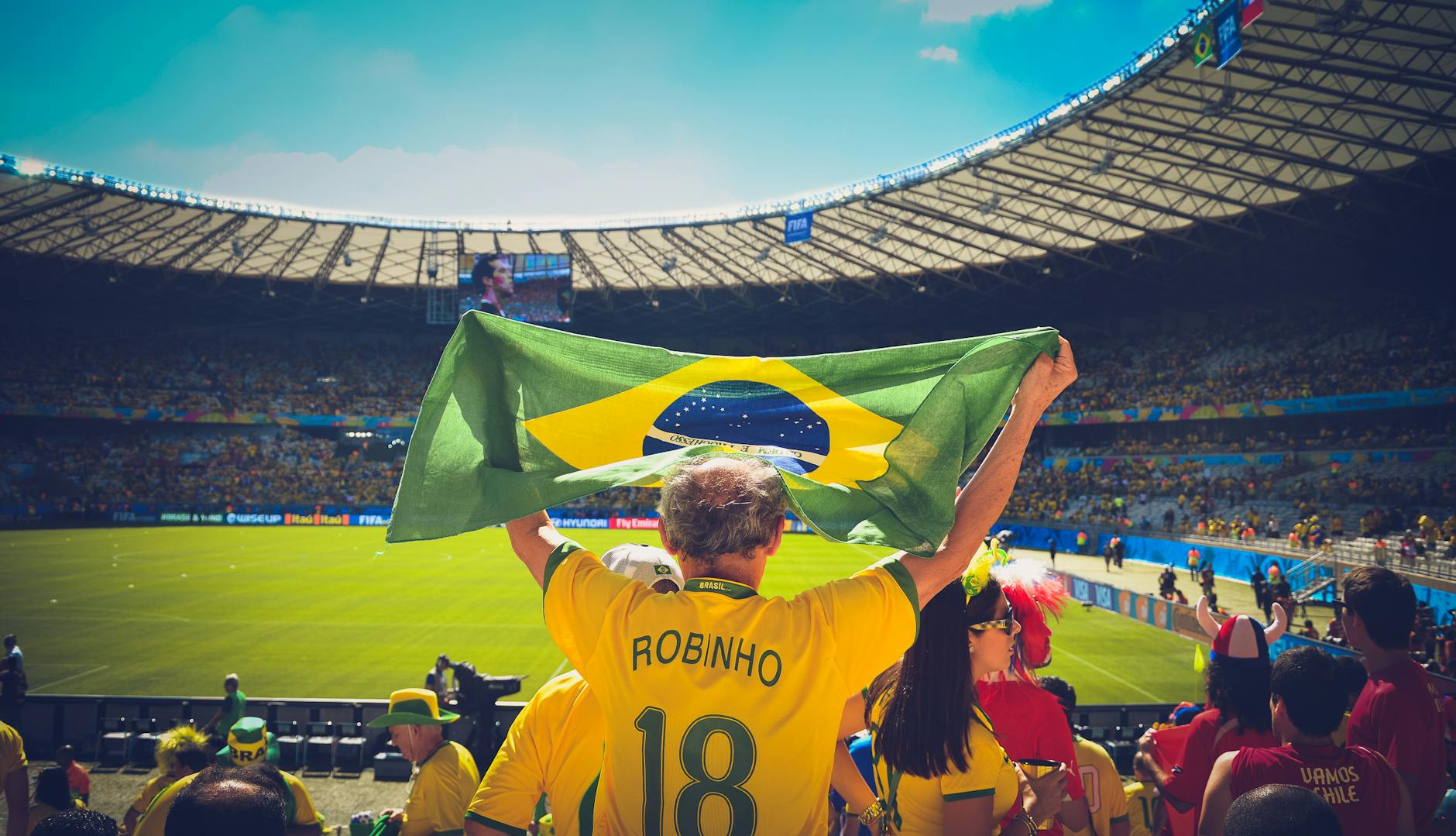
Photo by Caio on Pexels
Where It Fell Apart
The city ranking fell apart whenever I treated travel as a footnote. The 2026 World Cup spans three countries and 16 cities, so a supporter following one national team may face international border procedures, long-haul domestic flights, changing time zones, and rapidly rising accommodation prices. Los Angeles is a perfect example: its fan festival plan is compelling, but road traffic and venue distance can punish anyone building an itinerary from map pins alone. New York/New Jersey presents a similar issue because the final venue sits in East Rutherford, New Jersey, not Manhattan.
Weather and altitude also complicate team analysis. Mexico City is approximately 2,240 meters above sea level, a condition that can influence recovery and running intensity for teams unaccustomed to elevation. Warm-weather venues in the United States may create a different stress profile from Vancouver or Seattle. Stadium technology can control rain and heat in some venues, but it cannot erase the effects of flights, training schedules, sleep disruption, or unfamiliar humidity. The contrarian conclusion is this: the best football prediction may sometimes come from subtracting glamour and adding recovery data.
The second information-gain finding concerns verification timing. Supporters and bettors often wait until match day to check team news, but late updates can be structurally more important in a 48-team tournament because squad rotation becomes less predictable. A starting striker missing warm-up, a midfielder carrying a 75-minute limit, or a full-back returning from a muscle issue can move a model several percentage points. My recommended review windows are 72 hours before kickoff, 24 hours before kickoff, and approximately 60 minutes before the official lineup announcement. Never treat a preview written three weeks earlier as live information.
A responsible approach also means understanding market restrictions. Legal betting availability, age limits, identity verification, advertising rules, and payment methods vary by state, province, and country. The National Council on Problem Gambling states that “responsible gambling is about keeping gambling fun and within limits,” a principle worth applying before the tournament frenzy becomes a financial problem. Do not chase losses, do not use borrowed money, and do not assume a legal-looking website is authorized in your location. Goal Moments provides football information, not a guarantee of profit.
See the tactical angles before the next major fixture arrives.
Would I Use It Again?
Yes, I would use the same five-part framework again, but I would not freeze the rankings. Host-city scores should be refreshed when FIFA confirms match assignments, kickoff times, ticketing phases, public transport plans, and official fan-zone details. Team predictions should be refreshed even more often because injuries, club workloads, managerial changes, and late squad selections can overwhelm historical reputation. This is the central difference between useful World Cup analysis and recycled tournament commentary: useful analysis has an expiry date.
My current shortlist is Atlanta for atmosphere and semifinal significance, Los Angeles for public programming and cultural range, New York/New Jersey for the final, and Mexico City for historical weight and altitude-driven tactical intrigue. That shortlist is not a claim that other cities are weak. Toronto, Vancouver, Seattle, San Francisco Bay Area, Dallas, Houston, Miami, Philadelphia, Kansas City, Boston, Monterrey, and Guadalajara all bring different strengths. The correct choice depends on whether your priority is one match, multiple matches, team travel, family access, nightlife, or analytical value.
For fans following the competition online, Goal Moments should function as a daily filter: match predictions explain probability, tactical coverage explains mechanisms, player stats explain form, and tournament reporting explains context. Keep three numbers visible before every prediction—recent expected-goal difference, rest days, and confirmed absences. Then add one human question: what does this match mean to each team? Numbers describe pressure beautifully, but they do not remove it. That is where football becomes football again.
2026 World Cup match predictions and odds analysis
My final score is 8.6 out of 10 for the football 2026 World Cup experience, with Atlanta narrowly leading my host-city test. The tournament’s 48-team, 104-match structure promises unmatched variety, but it also punishes lazy planning, stale statistics, and emotional betting. Check official FIFA information, compare current team data, plan transport early, and keep any gambling activity within a strict entertainment budget. That is the winning play, honestly.

Photo by Patricia Bozan on Pexels
Want a sharper daily view of teams, players, and match conditions?
football 2026 World Cup team guides
Frequently Asked Questions
Q: What is the football 2026 World Cup?
A: The football 2026 World Cup is the FIFA men’s international tournament hosted by Canada, Mexico, and the United States from June 11 to July 19, 2026. It will feature 48 teams and 104 matches across 16 host cities. The format includes 12 groups of four, followed by a round of 32, which creates more knockout opportunities and more complex qualification calculations than the 2022 tournament.
Q: How do I follow the 2026 World Cup effectively?
A: Follow the official FIFA schedule first, then track team news, lineups, venue conditions, and travel requirements through reliable sources. Check squad availability 72 hours, 24 hours, and about 60 minutes before kickoff because late injuries can change tactical expectations. Goal Moments can help by combining match predictions, player statistics, tactical analysis, and tournament updates in one football-focused workflow.
Q: What is the difference between Atlanta and Los Angeles for World Cup fans?
A: Atlanta offers a concentrated stadium atmosphere and eight matches at Mercedes-Benz Stadium, including a semifinal, while Los Angeles offers eight matches plus 39 days of fan celebrations. Atlanta generally scores better for venue accessibility and match-day concentration. Los Angeles scores higher for cultural programming, the FIFA Fan Festival at the Los Angeles Memorial Coliseum, and the wider entertainment experience, although traffic requires careful planning.
Q: Is the expanded 48-team World Cup worth following?
A: Yes, the 48-team World Cup is worth following because it adds 16 teams, 40 matches compared with Qatar 2022, and a new round of 32. The larger field gives emerging football nations greater visibility and creates more qualification permutations. However, supporters should expect uneven matchups, heavier travel demands, and more complicated third-place calculations during the group stage.
Q: What should I do if World Cup prediction information looks outdated?
A: Replace outdated predictions with a fresh review of injuries, confirmed lineups, rest days, recent expected-goal data, and venue conditions. A preview written weeks before kickoff may not reflect a striker’s fitness, a tactical change, or a goalkeeper suspension. Compare publication dates, prefer official FIFA and federation announcements, and never use a static prediction as a reason to chase a losing bet.
Q: How much does it cost to attend the football 2026 World Cup?
A: There is no single fixed cost because ticket categories, match importance, city, accommodation, transport, and exchange rates vary significantly. A supporter should budget separately for tickets, flights, hotels, local travel, food, insurance, and visa or entry requirements where applicable. Use official FIFA ticket information, avoid unofficial resellers, and set a maximum total budget before purchasing anything.
Q: Is World Cup betting legal everywhere in 2026?
A: No, World Cup betting legality varies by country, U.S. state, Canadian province, and local regulator. Check whether the operator is licensed in your exact location, confirm age and identity requirements, and review deposit or withdrawal rules before registering. Gambling should remain optional entertainment, and you should never bet borrowed money, chase losses, or treat Goal Moments analysis as a profit guarantee.
Thank you for reading.
Goal Moments · Editorial Archive · No. 01