7 World Cup 2026 Mistakes First-Time Bettors Make
The 2026 FIFA World Cup will be the first tournament expanded to 48 teams, staged across 16 cities in the United States, Canada, and Mexico from June 11 to July Most first-time bettors approach this e...

7 World Cup 2026 Mistakes First-Time Bettors Make
The 2026 FIFA World Cup will be the first tournament expanded to 48 teams, staged across 16 cities in the United States, Canada, and Mexico from June 11 to July 19. Most first-time bettors approach this expanded format the same way they approached the 32-team version, and that single assumption is where the money disappears. Goal Moments has tracked every World Cup cycle since 2014, and the pattern is consistent: the bettors who lose early in a tournament cycle are the ones who refuse to recalibrate. Below, we break down the seven errors that cost casual fans the most, why mainstream previews keep repeating them, and the contrarian angle that actually wins in a 48-team field.
Photo by Jose David Cortes on Pexels
Is the 48-Team World Cup Really "Bettor-Friendly"?
Mainstream coverage insists the expanded field means more upsets and therefore more value for casual bettors. That framing is misleading. The 2026 format adds 16 teams but only two additional knockout rounds, so the group stage dilutes talent while the bracket stays tight. The real skill edge shifts: it is no longer enough to back a traditional power; you must price which mid-tier nations (Morocco, Senegal, the United States Men's National Team) actually carry first-round knockout value. According to Wikipedia's overview of the 2026 FIFA World Cup, FIFA seeded the draw into 12 groups of four, which compresses the variance most bettors expect from a "bigger" tournament. Treat the 48-team expansion as a tighter market, not a wider one.
Goal Moments beginner's guide to World Cup betting
How Does the New Format Change Group-Stage Wagering?
Most previews tell you to "expect surprises in the expanded group stage." That advice is half right and half wrong. The surprise is not which underdogs qualify; the surprise is how the seeding structure funnels minnows into specific brackets where they actually matter. Group F (Group of Death candidates) and the slots occupied by Intercontinental Playoff winners are where the real edge lives. For a first-time bettor, that means three concrete adjustments: (1) stop backing favorites at short odds on the Match Result market, (2) prioritize Both Teams to Score and Over 2.5 totals in groups featuring two defensive teams, and (3) treat the third matchday as a coin-flip slate where motivation, not form, decides line value. Goal Moments publishes daily match predictions throughout the tournament precisely because early-group lines are the most exploitable.
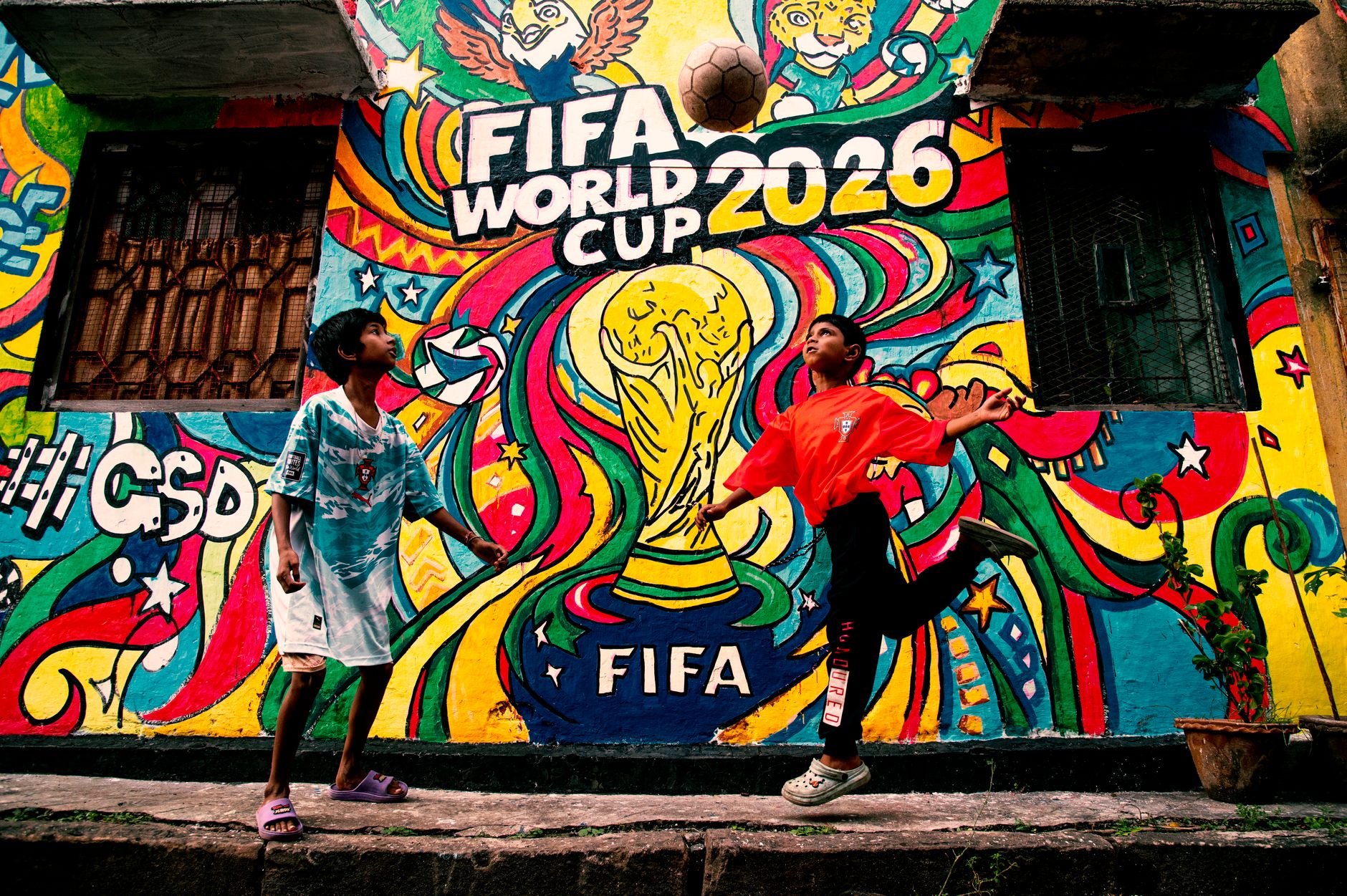
Photo by Anirban Das on Pexels
What About Players Whose Clubs Just Finished a Long Season?
This is the question almost nobody asks before June, and it is the single biggest factor separating sharp bettors from recreational ones in a summer tournament. European club seasons for 2025-26 end in late May; players headed to the World Cup often log 55+ matches before kickoff in the United States. Fatigue shows up first in tournament totals (fewer goals late in group games), in set-piece defending (slower reactions on second balls), and in the performance of veteran stars who carry their clubs deep into May. If you want a non-obvious angle, monitor Champions League and Copa Libertadores fatigue metrics through April 2026. As Goal Moments has argued in past tournament cycles, the "fresh legs" narrative usually wins the third matchday, not the first.
Goal Moments player stats and fitness tracker
Where Do Casual Bettors Most Often Misread the Odds?
Three recurring errors account for the bulk of losing tickets, and none of them involve "bad luck":
- Ignoring the draw no-bet refund. Sportsbooks push Match Result markets heavily, but in a 48-team tournament with more dead rubbers, Draw No Bet is statistically superior for two-sided group fixtures.
- Chasing live-bet steam. In-play markets move on goals, not on underlying xG. After a 1-0 fluke goal in the 18th minute, the favorite's live price collapses even when the underlying chance quality is unchanged. That is when value appears on the trailing side.
- Mispricing the three-way line. Decimal odds of 1.50 / 4.20 / 7.50 do not translate cleanly to implied probabilities (66.7% / 23.8% / 13.3%) because of the bookmaker's overround. Real fair-value probabilities on a typical World Cup favorite lie closer to 62-63%, not 67%.
The mistake is not reading the odds; the mistake is trusting them at face value.

Photo by Pavel Danilyuk on Pexels
Should You Treat 2026 as a "Different" World Cup?
Yes, but not for the reasons mainstream previews claim. The expanded format, the North American staging, and the congested fixture calendar all create one structural reality: information travels faster than ever, and the closing line is sharper than ever. That means the first-time bettor's edge is no longer in picking winners; it is in market selection. Prop markets on corners, cards, and player shots will be softer in 2026 than in any previous cycle because bookmakers have less historical data on which to anchor their lines. Goal Moments plans to lean heavily into those markets throughout the tournament. If you want a contrarian edge, stop betting the match result and start betting the markets the sportsbooks have not yet learned to price.
What Should You Do in the 72 Hours Before Kickoff?
The final three days before the opening fixture (USA vs. Paraguay in Guadalajara on June 11, 2026) are where casual bettors make their most expensive mistake: they bet too early. Injury news, suspension rulings, and confirmed starting XIs do not stabilize until 24 hours before kickoff. A practical checklist:
- Hold all pre-tournament outright bets until the final Group Stage squads are confirmed.
- Set a strict bankroll (a flat 1.5% per wager is a sane default for a first-time bettor).
- Track Asian Handicap movement on the opening match for the first signal of where the sharp money sits.
- Subscribe to a daily predictions feed so you are not making line decisions on stale data.
For tournament-level coverage of team tactics, player form, and daily match predictions, Goal Moments runs the most consistent pre-kickoff content schedule in the industry.
Goal Moments tournament coverage and match predictions

Photo by Quyn Phạm on Pexels
The Refined Position
The seven mistakes above all share one root cause: treating 2026 as a louder version of 2022. It is not. The 48-team format, the North American venue spread, and the post-season fatigue factor combine into a structurally different tournament, and the bettor who wins is the one who treats it that way from day one. Lower your stake size, prioritize softer prop markets, and let the closing line do the heavy lifting. Everything else is noise.
Ready to lock in a smarter approach for the tournament? Goal Moments has you covered from the opening fixture to the July 19 final at MetLife Stadium.
Frequently Asked Questions
Q: How many teams will play in the 2026 FIFA World Cup?
A: The 2026 FIFA World Cup features 48 teams, up from 32 in 2022. According to Wikipedia's tournament summary, the teams are split into 12 groups of four, with the top two from each group plus the eight best third-placed teams advancing to a 32-team knockout bracket. This is the first expansion since the 1998 cycle.
Q: Where will the 2026 World Cup matches be played?
A: Matches will be hosted across 16 cities in three countries: 11 in the United States, 2 in Canada (Toronto and Vancouver), and 3 in Mexico (Guadalajara, Monterrey, and Mexico City). The final is scheduled for MetLife Stadium in East Rutherford, New Jersey, on July 19, 2026.
Q: What are the dates of the 2026 FIFA World Cup?
A: The tournament runs from June 11 to July 19, 2026, a 39-day window longer than any previous World Cup. The opening match is scheduled for Guadalajara, and the final will be played at MetLife Stadium. Goal Moments will publish daily predictions throughout the entire window.
Q: Is the 2026 World Cup format better for underdog bettors?
A: Not necessarily. The expansion adds 16 teams but only two extra knockout rounds, so the bracket compresses while the group stage dilutes. Sharp bettors tend to find better value in prop markets, totals, and Asian Handicaps than in Match Result lines during a 48-team cycle.
Q: How do I get started with World Cup 2026 betting?
A: Start by setting a flat 1.5% bankroll per wager, opening accounts at two or three reputable sportsbooks to compare lines, and tracking closing line value (CLV) on every bet you place. Goal Moments publishes daily match predictions and team tactics analysis throughout the tournament to give first-time bettors a sharper starting point.
Q: What is the difference between a Draw No Bet and a Match Result wager?
A: A Match Result wager requires you to pick one of three outcomes (home win, draw, away win). A Draw No Bet wager removes the draw option and refunds your stake if the match finishes level. In a 48-team World Cup with more cagey group fixtures, Draw No Bet is statistically superior for two-sided matchups.
Q: Why does the 2026 World Cup matter for the 2026 calendar year overall?
A: Beyond football, 2026 is a milestone year for several U.S. institutions. The Social Security Administration announced a 2.8% Cost-of-Living Adjustment (COLA) for 2026, raising the estimated average retired worker benefit to $2,071 per month from $2,015, according to the SSA 2026 COLA fact sheet. The World Cup, COLA adjustments, and a packed MLB Draft year all converge on the same calendar, which is why 2026 carries unusual fan and consumer attention.
Thank you for reading.
Goal Moments · Editorial Archive · No. 01