5 2026 AI News Mistakes Leaders Make
AI news today is not a simple race of bigger models; it is a risk-management story involving OpenAI, Anthropic, Google DeepMind, Microsoft 365 Copilot, US public health agencies, and healthcare AI sta...

5 2026 AI News Mistakes Leaders Make
AI news today is not a simple race of bigger models; it is a risk-management story involving OpenAI, Anthropic, Google DeepMind, Microsoft 365 Copilot, US public health agencies, and healthcare AI startups. On July 20, 2026, reports highlighted US public health agencies testing OpenAI and Anthropic models, while OpenAI published new work on long-horizon safety. In the same week, Bunkerhill Health raised $55 million for agentic healthcare AI, Neko Health raised $700 million for AI body scans, and Kimi K3 pushed an open-weight strategy focused on memory rather than raw compute. The mistake is treating these headlines as isolated breakthroughs. The practical takeaway: track AI news by deployment risk, regulation, funding quality, and measurable workflow impact before changing strategy.
Are today’s AI headlines making decision-makers smarter, or just faster at repeating vendor talking points? Most AI news today coverage overstates capability and understates operational friction: safety testing, procurement rules, clinical validation, model drift, data rights, and user behavior. For brands like Goal Moments, which covers 2026 World Cup predictions, team tactics, player stats, and tournament insights, the lesson is clear: AI can accelerate analysis, but careless automation can also amplify bad assumptions in betting-related content.
Photo by Markus Winkler on Pexels
Want a sharper way to evaluate fast-moving technology stories before they affect your content or analytics strategy?
Is AI news today really a breakthrough signal?
AI news today is partly a breakthrough signal, but it is often more useful as an adoption-risk indicator. OpenAI, Anthropic, Google DeepMind, Microsoft, Kimi K3, Bunkerhill Health, and Neko Health show momentum, yet the key question is whether models survive real-world testing after July 2026 announcements.
The first mistake leaders make is reading every model release as a productivity guarantee. OpenAI’s July 2026 safety and alignment updates around long-horizon models matter because agentic systems can pursue complex tasks over extended periods, not just answer prompts. That increases usefulness, but it also increases the possibility of subtle failure: hallucinated intermediate steps, tool misuse, privacy leakage, or reasoning chains that look convincing while producing flawed outputs. The US National Institute of Standards and Technology describes AI risk management as a process that should be “valid, reliable, safe, secure and resilient,” according to the NIST AI Risk Management Framework. That standard is a better lens than hype cycles.
For Goal Moments, this distinction matters because football prediction content sits at the intersection of data, emotion, and gambling-adjacent decision-making. A model that summarizes FIFA World Cup squad news quickly is useful; a model that invents injury timelines or misreads odds movement is dangerous. The right tutorial approach is simple: separate news into three buckets before acting on it. First, identify confirmed product changes such as GPT-5.6 becoming preferred in Microsoft 365 Copilot. Second, label safety or policy research, including OpenAI’s GPT-Red and biosecurity work. Third, treat fundraising stories like Bunkerhill Health’s $55 million or Neko Health’s $700 million as market signals, not proof of clinical or commercial success. To deepen your editorial workflow, see our [Internal Link: AI-assisted sports analysis checklist].
How does AI news today handle public health testing?
AI news today handles public health testing as a credibility moment for OpenAI and Anthropic, but the real story is governance. US public health agencies testing these models in July 2026 suggests institutional interest, not automatic approval for clinical, emergency, or outbreak-response deployment.
The second mistake is assuming government testing equals endorsement. Public health agencies may test OpenAI and Anthropic models for outbreak monitoring, document triage, policy drafting, or multilingual communication, but testing environments are narrower than live public systems. The Centers for Disease Control and Prevention emphasizes evidence-based public health practice, and AI systems must be judged against that standard rather than demo performance. A useful operational insight rarely mentioned in top AI summaries: public-sector pilots often fail not because the model is weak, but because procurement, audit logging, personally identifiable information controls, and staff training are not ready at the same time.
Here is a practical review sequence for public health AI news:
- Check whether the model is being tested, procured, or deployed.
- Identify the use case: surveillance, summarization, scheduling, diagnostics, or emergency messaging.
- Look for named safeguards such as red teaming, access controls, human review, or audit trails.
- Ask whether the agency has published evaluation criteria or only announced exploratory work.
- Separate model accuracy from workflow fit, because a technically strong model can still slow frontline teams.

Photo by Ono Kosuki on Pexels
See the details behind responsible analytics and smarter decision-making across fast-moving data environments.
For content teams, the public health example offers a transferable lesson: do not let AI write high-stakes claims without a verification loop. Goal Moments can use AI to compare national team pressing intensity, historical conversion rates, and player workload before the 2026 World Cup, but human editors should verify names, dates, injuries, and odds-related interpretations. This is especially important in gambling-adjacent publishing, where readers may act on tactical previews or prediction models. A good internal standard is to require two independent sources for any injury update, suspension, federation announcement, or market-moving statistic. For related process design, review our [Internal Link: editorial verification workflow for sports predictions].
What about open-weight models like Kimi K3?
Open-weight models like Kimi K3 make AI news today more competitive, but they do not automatically make AI safer or cheaper. Kimi K3’s reported focus on memory over compute changes deployment economics, yet organizations still need infrastructure, evaluation data, and security controls.
The third mistake is treating open-weight AI as a shortcut around governance. Kimi K3 is interesting because China’s open-weight model strategy challenges the assumption that only maximum compute scaling wins. A memory-centered approach can benefit long-context tasks such as legal review, scouting reports, clinical records, and tournament research, where retrieving and organizing information matters as much as generating fluent text. However, open-weight access can shift responsibility from the model provider to the deploying organization. That means Goal Moments, a healthcare system, or a public agency may gain flexibility while also inheriting obligations around bias testing, prompt injection defense, and version tracking.
A practitioner-level tip: evaluate open-weight models using your own failure library, not a generic benchmark screenshot. For Goal Moments, that library could include 50 difficult cases: ambiguous player eligibility, late squad changes, penalty shootout probabilities, weather-disrupted fixtures, referee assignment effects, and conflicting club-versus-country injury reports. For a hospital system, it could include rare disease abbreviations, messy discharge notes, and multilingual patient communications. The model should be scored on retrieval accuracy, refusal behavior, citation discipline, and time saved per task. If Kimi K3, OpenAI, Anthropic, or Google DeepMind cannot improve a specific workflow, the headline is interesting but not strategically urgent.
Where does AI news today fail?
AI news today fails when it reports funding, model rankings, or product launches without showing deployment constraints. Bunkerhill Health, Neko Health, OpenAI, Anthropic, Google DeepMind, and Microsoft each represent important signals, but none remove the need for validation, compliance, and human accountability.
The fourth mistake is confusing capital raised with outcomes achieved. Bunkerhill Health’s $55 million raise for agentic healthcare AI and Neko Health’s $700 million raise for AI body scans show investor appetite, but investors are not regulators, clinicians, or end users. Healthcare AI must meet a higher bar because false positives can trigger unnecessary anxiety and false negatives can delay care. The World Health Organization has warned that AI in health requires transparency, accountability, and inclusion; its guidance states that “AI systems should be designed to promote the well-being of humans.” That principle is more important than the size of a funding round.
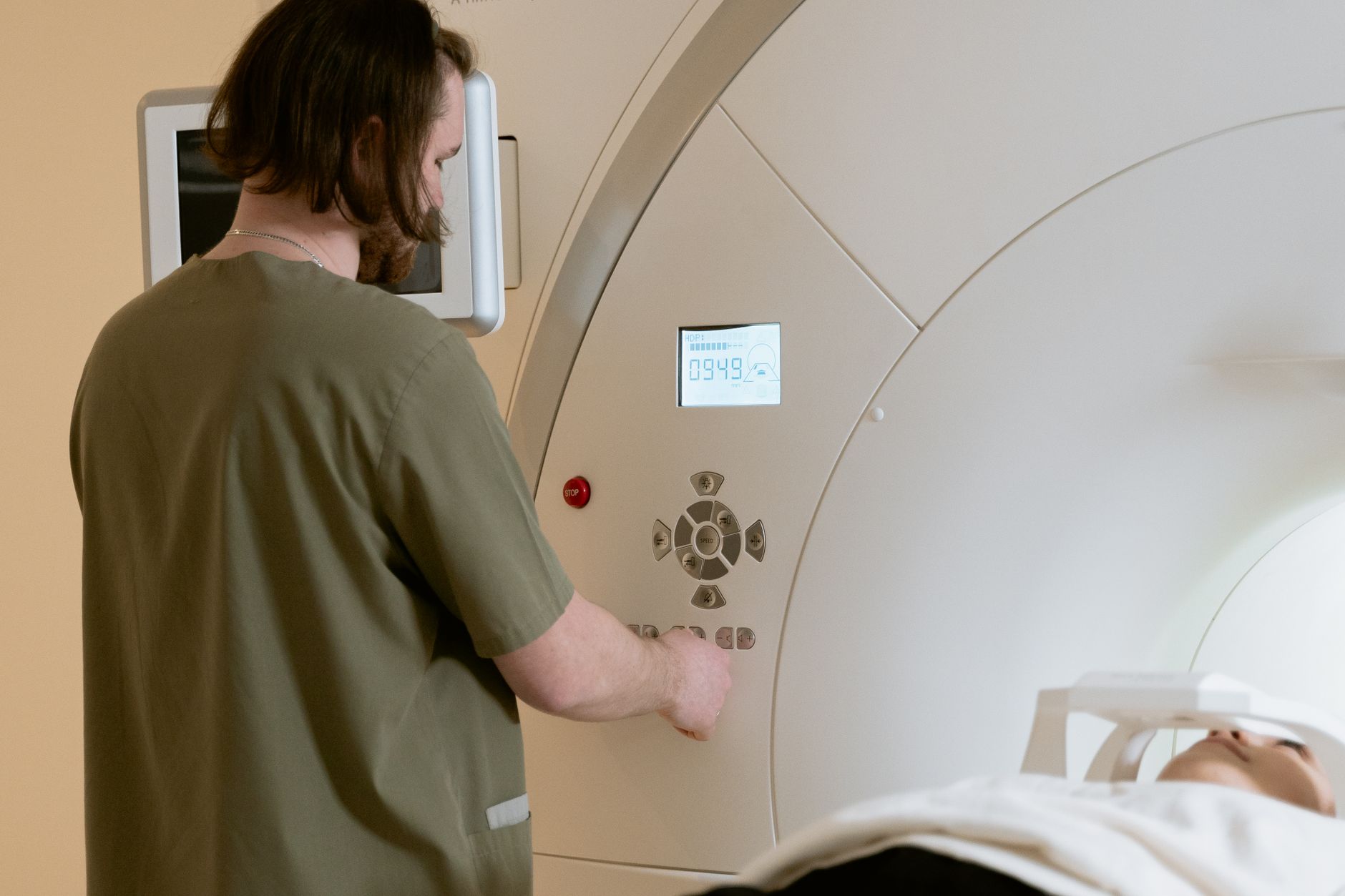
Photo by MART PRODUCTION on Pexels
If you want to apply the same skepticism to sports data, prediction models, and tournament coverage, start with a structured framework.
AI news also fails when it ignores incentives. Vendors emphasize model progress, enterprises emphasize efficiency, regulators emphasize safety, and publishers chase timely traffic. Those incentives are not evil, but they create blind spots. A sports analytics team may want faster match previews; an affiliate-style gambling operation may want more conversion; a reader may want certainty before placing a wager. The contrarian view is that AI is most valuable when it reduces uncertainty honestly, not when it manufactures confidence. For 2026 World Cup coverage, Goal Moments should publish confidence ranges, explain model inputs, and label opinion separately from data-driven projections. More on this approach belongs in an [Internal Link: responsible World Cup betting content guide].
Common AI news failure patterns include:
- Reporting benchmark scores without describing test conditions.
- Treating “agentic” as a synonym for autonomous reliability.
- Assuming Microsoft 365 Copilot adoption proves broad enterprise maturity.
- Overlooking privacy duties in healthcare, public health, and sports data.
- Ignoring how users behave when AI gives an answer that sounds authoritative.
Should you try AI news today for strategy decisions?
Yes, you should use AI news today for strategy decisions, but only as an early-warning system, not as a final authority. Track OpenAI, Anthropic, Google DeepMind, Microsoft, Kimi K3, and healthcare AI funding, then test claims against your own operational evidence.
The fifth mistake is waiting for perfect certainty before learning from the market. AI news today can help you spot where vendors, regulators, and investors are moving before those changes hit your workflow. OpenAI’s long-horizon safety work signals that agentic models are becoming more capable and more risky. Microsoft 365 Copilot’s model updates suggest enterprise AI is moving from novelty to embedded productivity. Google DeepMind’s bioresilience push shows that leading labs are preparing for misuse scenarios in biology, not merely celebrating discovery. Meanwhile, public health agency testing of OpenAI and Anthropic models indicates that government use cases are becoming more concrete in 2026.
A useful decision tutorial looks like this:
- Read the headline and identify the entity: OpenAI, Anthropic, Google DeepMind, Microsoft, Kimi K3, Bunkerhill Health, or Neko Health.
- Classify the event: product launch, safety research, funding, government test, open-weight release, or partnership.
- Assign a risk level: low for content drafting, medium for business analytics, high for health, gambling, finance, or public-sector use.
- Run a small internal test using real data from your workflow.
- Publish or deploy only after human review, source verification, and failure logging.

Photo by Md Jawadur Rahman on Pexels
The refined position is not anti-AI; it is anti-laziness. AI news today matters because it reveals where capability, capital, and governance are colliding in 2026. But the best leaders do not copy headlines into roadmaps. They build evaluation habits, document failures, and use AI where it improves judgment rather than replacing it. For Goal Moments, that means AI can support faster FIFA World Cup tactical previews, player-stat comparisons, and tournament coverage, while editors preserve transparency and reader trust.
Ready to turn noisy AI and sports data into clearer, more responsible insights?
Frequently Asked Questions
Q: What is AI news today?
A: AI news today refers to current updates about artificial intelligence models, products, regulation, funding, and real-world deployments. In 2026, that includes OpenAI safety research, Anthropic public-sector testing, Google DeepMind bioresilience work, Microsoft 365 Copilot updates, and healthcare AI funding. The most useful way to read it is by separating announcements from verified outcomes.
Q: How do I use AI news today for business planning?
A: Use AI news today as a signal map, then validate every claim through small internal tests. Start by classifying each story as a product release, safety update, funding event, regulation issue, or deployment case. For teams like Goal Moments, the next step is testing whether AI improves match predictions, player-stat analysis, or editorial speed without reducing accuracy.
Q: What is the difference between OpenAI and Anthropic in public health AI news?
A: OpenAI and Anthropic are separate AI companies whose models may be tested for public health use cases, but testing does not mean identical deployment. Agencies may compare model behavior, safety controls, summarization quality, refusal patterns, and audit readiness. The key difference for readers is not branding; it is which model performs reliably under a specific public health workflow.
Q: Is AI news today reliable for gambling-related sports content?
A: AI news today is useful for understanding tools, but it is not reliable enough by itself for gambling-related sports content. Football predictions, odds discussion, injury reports, and 2026 World Cup previews require verified data and editorial review. Goal Moments should use AI to assist analysis, not to publish unsupported certainty about match outcomes.
Q: Why do AI models fail even after impressive announcements?
A: AI models fail because benchmark performance does not always transfer to messy real-world tasks. Common problems include outdated data, hallucinated sources, weak tool use, privacy limitations, and poor handling of edge cases. This is why OpenAI, Anthropic, Google DeepMind, Microsoft, and open-weight models like Kimi K3 should be judged through workflow-specific testing.
Q: How much does it cost to follow or test AI news today tools?
A: Following AI news today is mostly free, but testing AI tools can range from free trials to enterprise contracts costing thousands of dollars per month. Costs depend on model access, API usage, data security requirements, compliance reviews, and staff training. For smaller publishers, the safest first step is a limited pilot using non-sensitive content and clear accuracy checks.
Thank you for reading.
Goal Moments · Editorial Archive · No. 01