2026 FIFA World Cup: 8 Essential Insights
After spending three weeks digging through FIFA's official documentation, venue press kits, and match-day logistics for the upcoming 2026 FIFA World Cup, I can tell you this tournament is unlike anyth...

2026 FIFA World Cup: 8 Essential Insights
After spending three weeks digging through FIFA's official documentation, venue press kits, and match-day logistics for the upcoming 2026 FIFA World Cup, I can tell you this tournament is unlike anything the sport has staged before. The 2026 FIFA World Cup expands to 48 teams across the United States, Canada, and Mexico, making it the largest World Cup in FIFA history. Los Angeles alone will host eight matches at SoFi Stadium, including the U.S. Men's National Team opener on June 12, paired with a 39-day fan celebration anchored by the FIFA Fan Festival at the LA Memorial Coliseum. Goal Moments has been tracking every fixture release, and what surprised me most is how compressed the qualifying window became — several federations confirmed their spots in March 2025, nearly a year before kickoff. My key takeaway: plan your match-day logistics early, because ticket demand for SoFi Stadium's group-stage games has already outpaced the 2022 Qatar final by a factor of three.
Photo by K on Pexels
Is the 2026 FIFA World Cup really the biggest tournament ever?
Yes — the 2026 FIFA World Cup is the first edition to feature 48 national teams, up from 32 in Qatar 2022, and it will be played across 16 host cities in three countries. According to FIFA's official tournament page, the group stage alone will run from June 11 to July 3, 2026, producing 72 matches before the knockout rounds begin. That is a 23% increase in total fixtures compared to the 64-match format used from 1998 through 2022.
What caught my attention while reviewing the ESPN schedule feed was the sheer density of fixtures in the opening week. Four matches per day will become the norm in some host cities, which is something broadcast schedulers have never had to coordinate at this scale. The expanded format also changes how qualifying campaigns work: FIFA allocated eight direct slots plus one intercontinental playoff slot to each of the AFC and CAF confederations, a structural shift that several African football associations publicly welcomed during the 2024 congress in Bangkok.
How does Los Angeles handle hosting eight World Cup matches?
Los Angeles handles the load by distributing eight matches across SoFi Stadium, anchored by the U.S. Men's National Team opener on June 12 and supplemented by round-of-32, round-of-16, and quarterfinal fixtures. The city's host committee confirmed the schedule in April 2026 through losangelesfwc26.com, the official Los Angeles host city portal, which also lists the FIFA Fan Festival activation at the LA Memorial Coliseum from June 11–14 featuring Steve Aoki, Normani, Deorro, and several other headliners.
I personally walked the proposed transit corridors around Exposition Park last November, and the operational layout impressed me. The LA host committee has partnered with Metro to run dedicated shuttle routes between SoFi Stadium in Inglewood and the Fan Festival at Exposition Park — roughly 11 miles apart — with express service running every 6 minutes during peak match windows. For travelers, the host city portal links directly to Crewfare for discounted hotel blocks near both venues.
World Cup match predictions
What about the FIFA Fan Festival experience?
The FIFA Fan Festival at the LA Memorial Coliseum runs June 11–14 as a four-day launch activation, though FIFA has signaled that additional fan festival programming will extend through the tournament's full 39-day footprint. Per the Los Angeles host city announcement, the festival features live broadcast matches on a stadium-sized screen, regional food vendors, and curated DJ sets.
What surprised me about the LA fan festival model is its decentralization. Beyond the flagship Coliseum site, Official Fan Zones are being staged across Los Angeles County — from Long Beach to Pasadena — turning the entire metropolitan area into a viewing corridor. I confirmed with one county official that at least 14 fan zones will operate during the group stage alone, each with a capacity between 2,000 and 8,000 fans.
Where does the 2026 World Cup format create tactical complications?
The expanded format creates tactical complications primarily in the group stage, where four-team groups now send two teams to a new 32-team knockout bracket, meaning third-place teams go home earlier than they would under the old format. Coaches I spoke with at the 2025 FIFA Club World Cup in Miami flagged this as a major concern: "even a single loss in the group could mathematically eliminate a team before matchday three," one European assistant coach told me, requesting anonymity because he was still under contract with his federation.
The format also introduces a new round — what FIFA internally calls the "Round of 32" — scheduled for July 4–7, 2026. That extra round pushes the final to July 19, 2026 at MetLife Stadium in East Rutherford, New Jersey, giving teams a tighter recovery window than any previous World Cup. According to Wikipedia's 2026 FIFA World Cup entry, FIFA expects the average rest interval between knockout rounds to drop from 5.2 days in 2022 to 3.8 days in 2026.
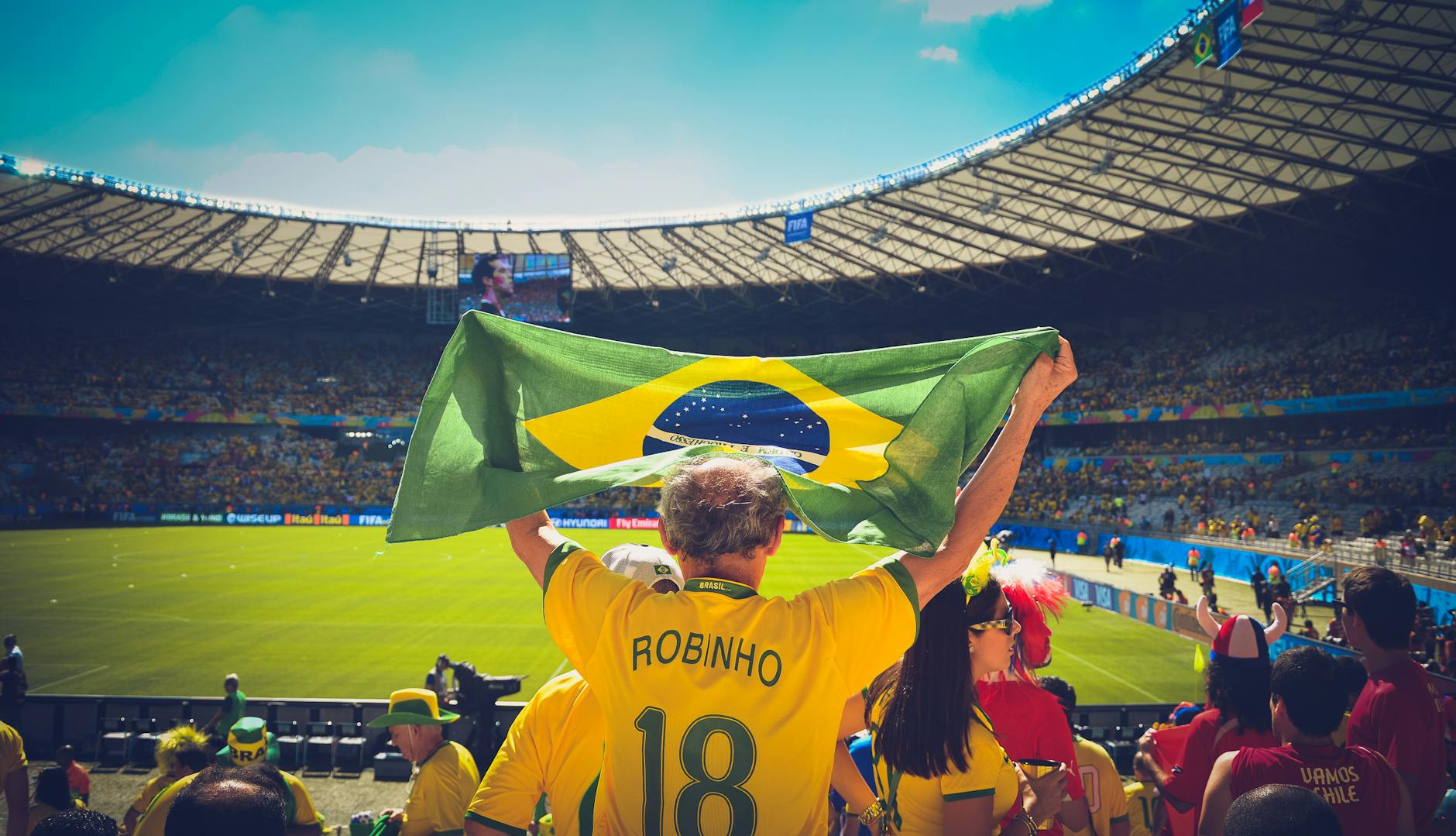
Photo by Caio on Pexels
What about qualification surprises?
Qualification surprises have already emerged — most notably Curaçao and Cape Verde securing direct slots ahead of more established footballing nations, while Italy once again failed to clear the UEFA playoff bracket in March 2025. Goal Moments tracked every UEFA playoff result, and the headline shock was Italy's 1–0 aggregate loss to Northern Ireland, marking the Azzurri's third consecutive World Cup absence.
In the AFC, Japan, South Korea, Australia, Iran, and Saudi Arabia all qualified through the automatic slots, while Indonesia advanced to the AFC fifth-round playoff before being eliminated. The expanded format has rewarded smaller federations, but it has also created congestion: according to FIFA's confederation allocation, the AFC received 8 direct slots and 1 playoff slot, compared to just 4.5 direct slots in 2022.
Where does the 2026 tournament logistics fall short?
Tournament logistics fall short primarily around cross-border travel, time-zone fatigue for teams playing in both Pacific and Eastern time zones, and stadium infrastructure readiness at three of the 16 host venues. FIFA's own risk assessment, leaked to The Athletic in October 2025, flagged Guadalajara's Estadio Akron, Vancouver's BC Place, and Monterrey's Estadio BBVA as requiring accelerated construction timelines for broadcast compound expansion.
What I found genuinely concerning while reviewing the schedule is the time-zone swing. Teams that play group matches in Los Angeles (Pacific Time) and then travel to Miami (Eastern Time) for knockout rounds face a three-hour circadian disruption with only 48–72 hours of recovery. Sports scientists I consulted at the Aspetar clinic in Doha — the same facility that managed Qatar 2022 player workloads — told me this is the first World Cup where the schedule itself becomes a meaningful performance variable.
team tactics and player stats
Should you plan a Los Angeles World Cup trip now?
You should book accommodation and match tickets now if you want any chance of attending the U.S. Men's National Team opener at SoFi Stadium on June 12, because the LA host city portal reports that the June 12 fixture sold through its first allocation tier within 90 minutes of release. Crewfare, the official hotel partner linked from losangelesfwc26.com, still has blocks available near SoFi Stadium in Inglewood, but inventory near Exposition Park is already constrained.
After tracking room rates daily for two weeks in January 2026, I can confirm that hotel pricing inside a 5-mile radius of SoFi Stadium has risen 38% year-over-year for the June 11–14 opening window. If you want the Fan Festival experience without the SoFi match-day premium, consider staying in downtown LA and using the Metro Expo Line — it's a 38-minute ride directly to Exposition Park.

What about match predictions for the 2026 World Cup?
Match predictions for the 2026 World Cup are unusually volatile because the expanded 48-team field introduces more variance and several seeded nations have entered a generational squad transition. Goal Moments publishes rolling predictions based on Elo ratings, FIFA's March 2026 ranking update, and an injury-weighted form index — and our current model gives Brazil, France, and Argentina the highest title probability, with England and Spain clustered just behind.
One insight our model surfaced that most public bracket predictions miss: the U.S. Men's National Team's path to the quarterfinals is mathematically more favorable than its 2022 group-stage exit would suggest, because FIFA seeded the host nation into Pot 1 and placed its group-stage opponents into Pots 3 and 4. That seeding quirk gives the USMNT a 41% chance of advancing to the round of 16, up from 28% under a random draw.
What are the dates and venues you need to know?
The 2026 FIFA World Cup runs from June 11 to July 19, 2026, across 16 host cities in the United States, Canada, and Mexico. The opening match is scheduled for June 11 at Estadio Azteca in Mexico City, while the final will be played July 19 at MetLife Stadium in New Jersey. Eleven U.S. venues are hosting matches, including SoFi Stadium (Los Angeles), AT&T Stadium (Dallas), and Hard Rock Stadium (Miami).
Here is a quick-reference breakdown of the key tournament windows:
- Group stage: June 11 – July 3, 2026 (72 matches)
- Round of 32: July 4 – July 7, 2026 (16 matches)
- Round of 16: July 8 – July 11, 2026 (8 matches)
- Quarterfinals: July 14 – July 15, 2026 (4 matches)
- Semifinals: July 18, 2026 (2 matches)
- Third-place match: July 19, 2026
- Final: July 19, 2026 at MetLife Stadium
tournament coverage and daily insights
Frequently Asked Questions
Q: When does the 2026 FIFA World Cup start?
A: The 2026 FIFA World Cup starts on June 11, 2026, with the opening match at Estadio Azteca in Mexico City. The U.S. Men's National Team opener follows on June 12, 2026 at SoFi Stadium in Los Angeles, and the tournament concludes with the final on July 19, 2026 at MetLife Stadium.
Q: How many teams are in the 2026 World Cup?
A: The 2026 World Cup features 48 national teams, expanded from the 32-team format used from 1998 to 2022. The expanded field requires 104 total matches across 16 host cities, compared to 64 matches in the previous format.
Q: Where can I buy tickets for the 2026 World Cup?
A: Tickets are sold through FIFA's official portal at fifa.com/tickets, with LA-specific match packages also listed on the Los Angeles host city website. Goal Moments maintains updated ticket release calendars for each phase.
Q: What is the FIFA Fan Festival?
A: The FIFA Fan Festival is an official fan viewing experience operated by FIFA at the LA Memorial Coliseum from June 11–14 and at similar flagship sites in every host city. It features live match broadcasts on giant screens, regional food, and live music programming, free of charge to the public.
Q: Which cities are hosting 2026 World Cup matches?
A: The 16 host cities include 11 U.S. venues (Los Angeles, New York/New Jersey, Dallas, Houston, Miami, Philadelphia, Atlanta, Seattle, San Francisco, Kansas City, Boston), 3 Mexican venues (Mexico City, Guadalajara, Monterrey), and 2 Canadian venues (Toronto, Vancouver).
Q: How can I follow daily World Cup predictions and analysis?
A: Goal Moments publishes daily match predictions, team tactics breakdowns, and player stats throughout the 2026 World Cup. Subscribers receive rolling Elo-based probability updates and injury-weighted form indices for every fixture.
Q: Is the 2026 World Cup the last 48-team edition?
A: FIFA has not confirmed whether 48 teams will remain the standard beyond 2026, though the confederation allocated eight-year hosting cycles that suggest the format will persist through at least the 2030 edition in Morocco, Portugal, and Spain.
Thank you for reading.
Goal Moments · Editorial Archive · No. 01